Field guide
A field guide to the desert Southwest
68 iconic species, each with care advice written for the real conditions — alkaline caliche, hard sun, and a monsoon that arrives in July. Sourced from USDA PLANTS, SEINet, and regional extension services.
68 plants
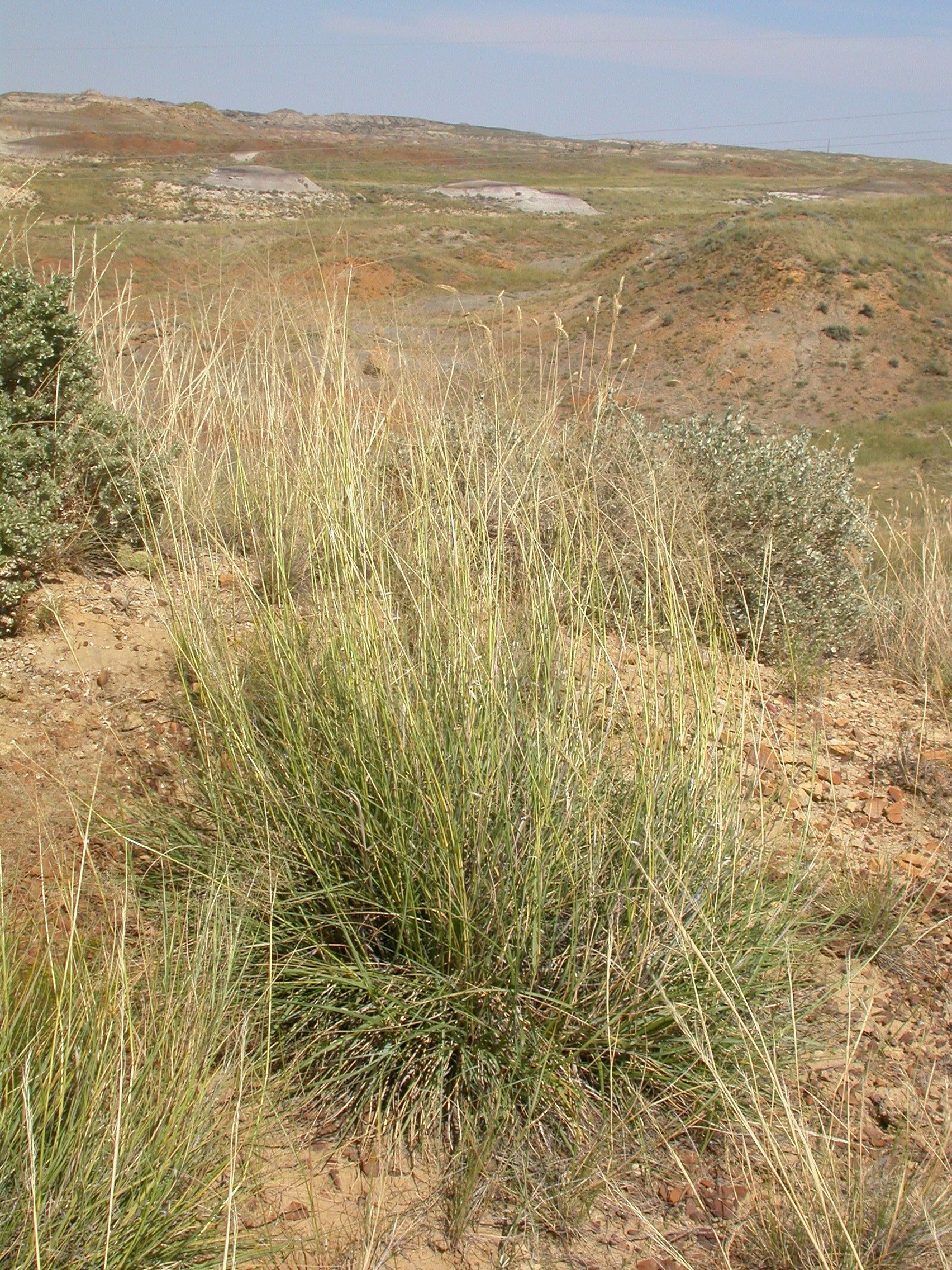 Poaceae
Alkali sacaton
Sporobolus airoides
A robust warm-season bunchgrass forming stout, rounded tussocks topped by large, diffuse, pinkish seed panicles that catch the light like a fine mist. It thrives where few grasses can, colonizing alkaline flats and saline bottomlands.
✿ Blooms Jun – Sep
 Cupressaceae
Alligator juniper
Juniperus deppeana
Instantly recognizable by its distinctive bark broken into square, gray plates like alligator hide, this rugged evergreen juniper forms broad, picturesque crowns on foothill and mountain slopes. It is among the largest and longest-lived junipers of the Southwest.
 Rosaceae
Apache plume
Fallugia paradoxa
A sprawling native shrub that carries white single-rose flowers and feathery pink seed-head plumes at the same time all summer — the plumes are the 'Apache' feathers the name refers to.
✿ Blooms Apr – Sep
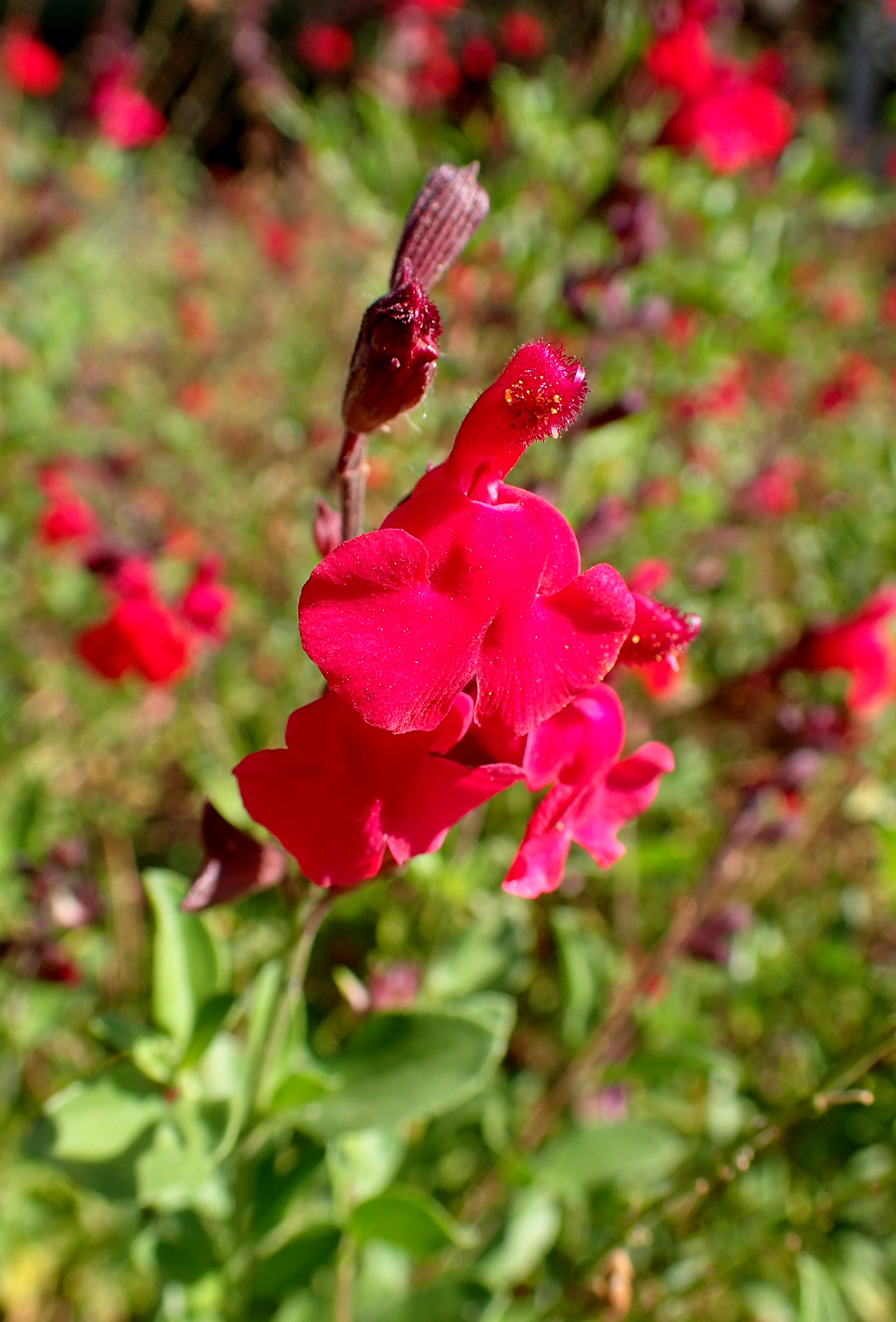 Lamiaceae
Autumn sage
Salvia greggii
A compact, aromatic subshrub covered for months in small lipped flowers in shades of red, coral, pink, or white. A workhorse of Southwest gardens and a reliable draw for hummingbirds and bees.
✿ Blooms Mar – Nov
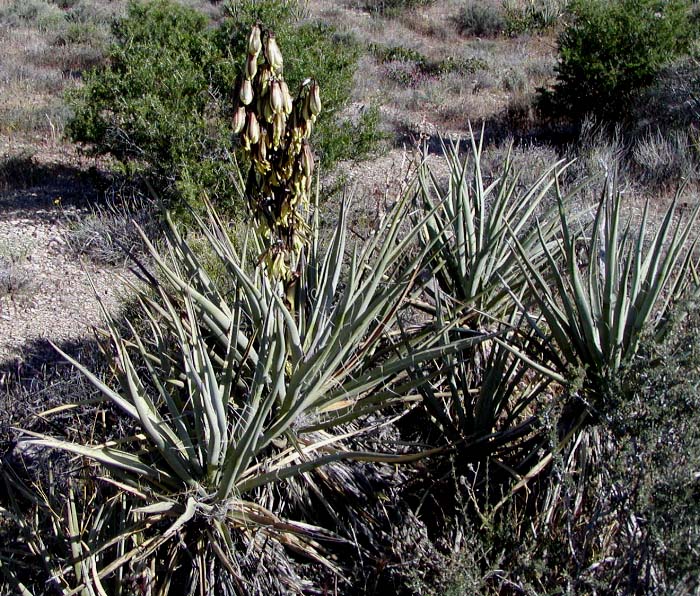 Asparagaceae
Banana yucca
Yucca baccata
A stout, low yucca with broad, stiff, blue-green sword leaves edged in curling fibers, topped in spring by dense clusters of waxy cream flowers. Its large fleshy, banana-like fruits were an important traditional food across the Southwest.
✿ Blooms Apr – Jun
 Cactaceae
Beavertail prickly pear
Opuntia basilaris
A low, clumping prickly pear with flat, spoon-shaped blue-gray to purple-tinged pads that look deceptively spineless but bristle with tufts of tiny barbed glochids. In spring it erupts in brilliant magenta to rose flowers, making it one of the showiest low-desert cacti.
✿ Blooms Mar – Jun
 Asteraceae
Big sagebrush
Artemisia tridentata
The aromatic silver-gray shrub that scents the high desert after rain. Its three-toothed leaves (tridentata) are unmistakable, and it anchors vast stretches of the northern NM steppe.
✿ Blooms Aug – Oct
 Asteraceae
Blackfoot daisy
Melampodium leucanthum
A tidy, low mound smothered for much of the year in small white daisies with sunny yellow centers, giving off a faint honey scent. One of the longest-blooming and most dependable native groundcovers of the Southwest.
✿ Blooms Mar – Oct
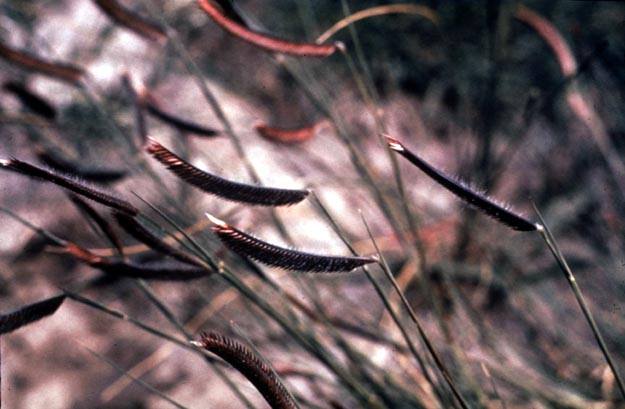 Poaceae
Blue grama
Bouteloua gracilis
New Mexico's state grass — a fine-textured warm-season bunchgrass whose seed heads hang sideways like little combs or eyelashes. The backbone of native shortgrass and a superb low-water lawn alternative.
✿ Blooms Jul – Sep
 Fabaceae
Blue palo verde
Parkinsonia florida
A graceful desert tree with smooth blue-green bark and branches that photosynthesize, briefly leafy and then smothered in a spectacular haze of yellow spring flowers. A classic Sonoran wash tree and important nurse plant for young saguaros.
✿ Blooms Mar – May
 Asteraceae
Brittlebush
Encelia farinosa
A rounded desert subshrub of silvery, felted leaves that erupts each spring into a cloud of long-stemmed golden daisies. A cheerful roadside and hillside pioneer that colonizes disturbed ground across the warm deserts.
✿ Blooms Mar – May
 Asteraceae
Broom snakeweed
Gutierrezia sarothrae
A small, dense, resinous subshrub that turns solid gold in fall alongside chamisa. An indicator of dry, disturbed, or overgrazed ground across the high desert.
✿ Blooms Aug – Oct
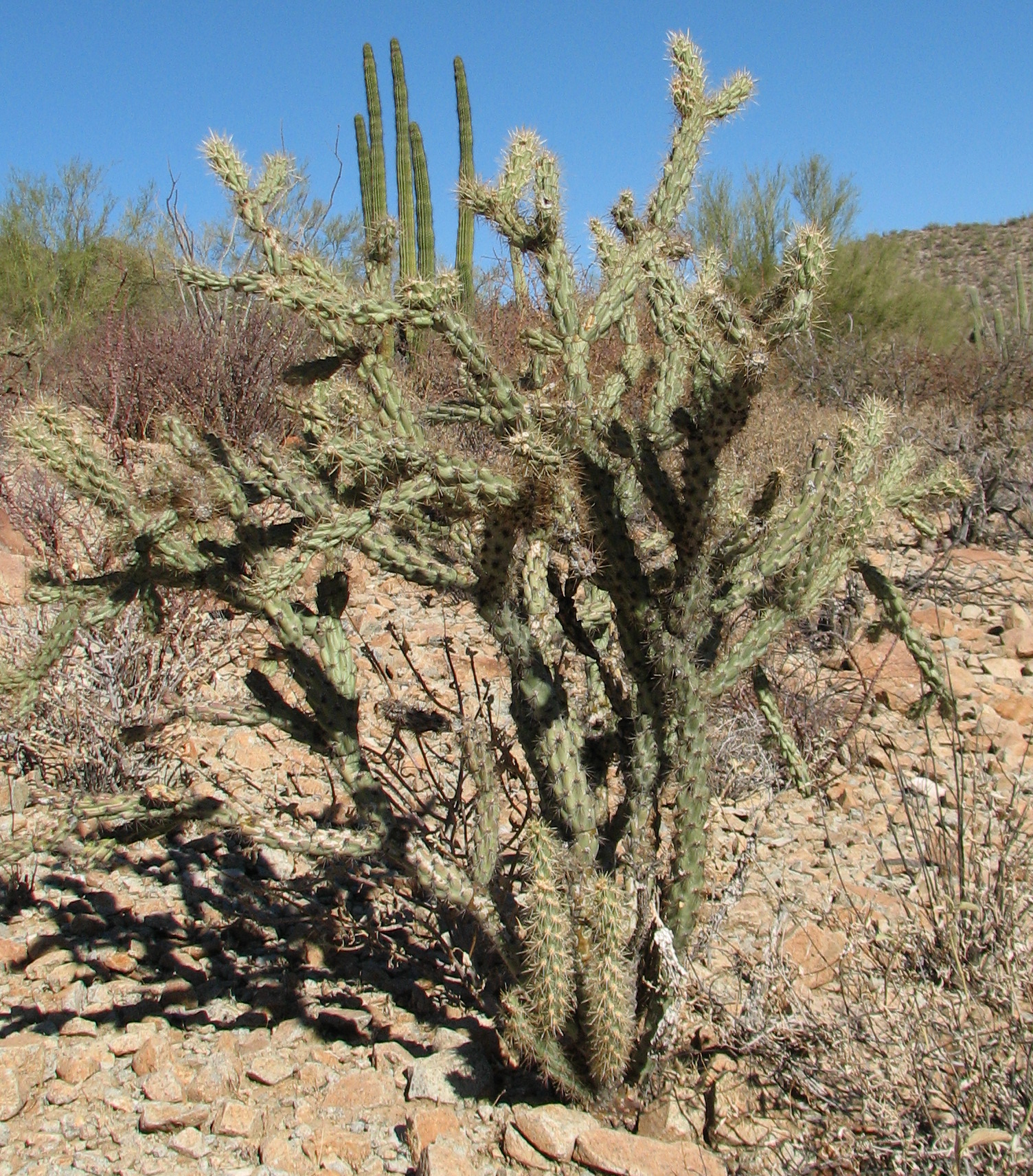 Cactaceae
Buckhorn cholla
Cylindropuntia acanthocarpa
A shrubby, many-branched cholla whose stout, antler-like arms bristle with straw-colored spines and unfurl into showy yellow-to-bronze blooms each spring. It anchors bajadas and creosote flats across the Mojave and Sonoran deserts and offers nesting sites for cactus wrens.
✿ Blooms Apr – Jun
 Scrophulariaceae
Cenizo
Leucophyllum frutescens
A rounded evergreen shrub with soft silvery-gray foliage that erupts in bell-shaped purple to magenta flowers after summer monsoon rains — earning it the nickname 'barometer bush.' A cornerstone shrub of Southwest xeriscapes.
✿ Blooms Jun – Oct
 Asparagaceae
Century plant
Agave americana
A massive blue-gray rosette of thick, spine-tipped leaves that can sprawl six feet or more, a dramatic architectural anchor in warm-desert landscapes. After many years it sends up a towering asparagus-like flower stalk, blooms once, and dies.
✿ Blooms Jun – Aug
 Cactaceae
Christmas cholla
Cylindropuntia leptocaulis
A wispy, intricately branched cholla with slender pencil-thin green stems that lace through desert shrubs, nearly invisible until small greenish flowers give way to brilliant red berries that ripen in winter. Those festive scarlet fruits give it its common name.
✿ Blooms May – Aug
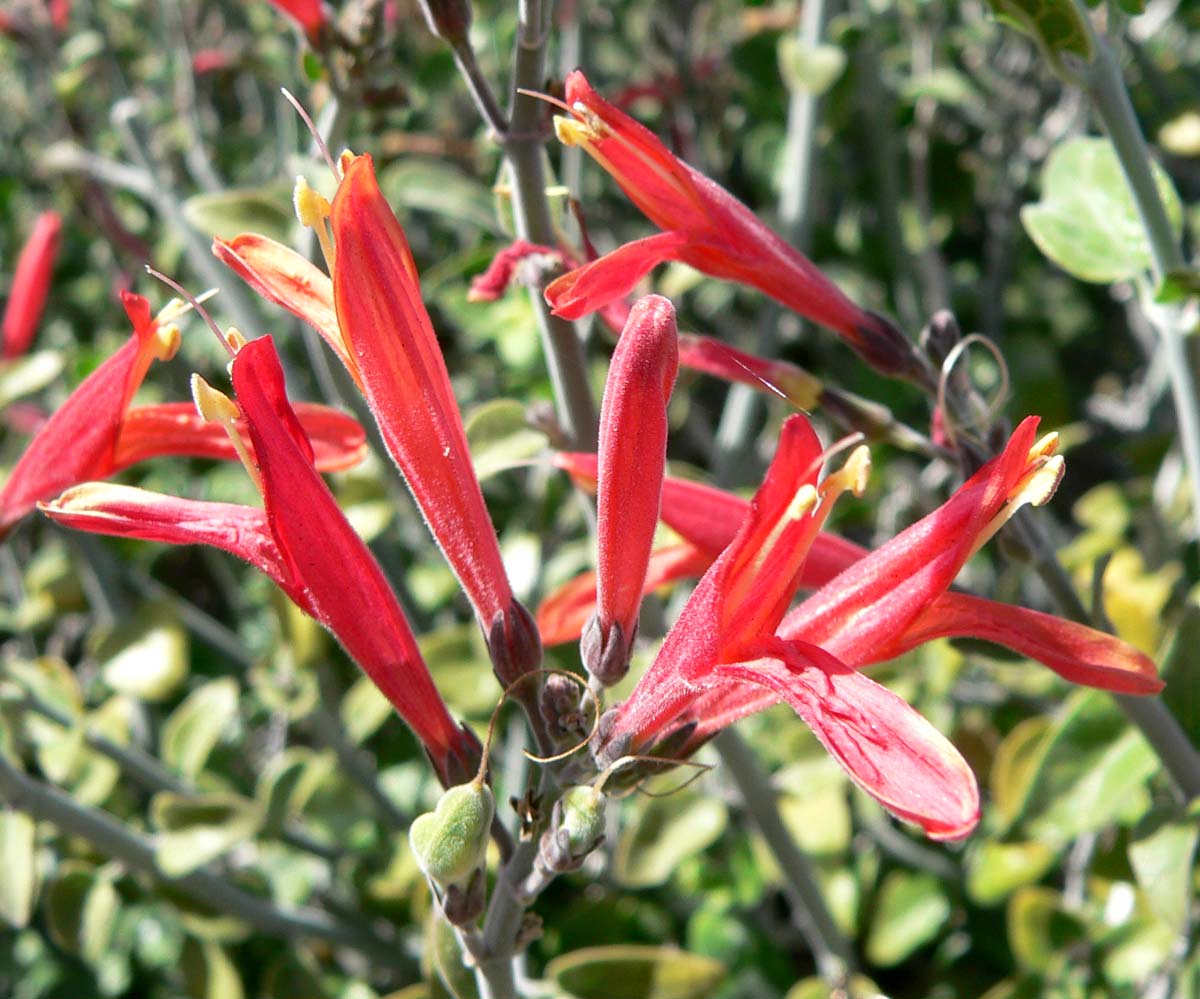 Acanthaceae
Chuparosa
Justicia californica
A sprawling, nearly leafless green-stemmed shrub of washes and low desert that lights up with tubular red-orange flowers, a premier cool-season hummingbird plant. Its name means hummingbird sipper in Spanish.
✿ Blooms Jan – Dec
 Cactaceae
Claret cup cactus
Echinocereus triglochidiatus
A mounding hedgehog cactus that lights up with waxy scarlet cup flowers in late spring — one of the few cacti hardy enough for the cold high desert and a top hummingbird plant.
✿ Blooms Apr – Jun
 Rosaceae
Cliffrose
Purshia stansburiana
A gnarled, semi-evergreen shrub of rocky rimrock and slopes that erupts in fragrant, pale-yellow to creamy rose-like flowers in spring, later trailing feathery, twisted seed plumes. Its resinous, tiny lobed leaves and shreddy bark give it a wind-sculpted, ancient look.
✿ Blooms Apr – Jun
 Zygophyllaceae
Creosote bush
Larrea tridentata
The dominant evergreen shrub of the American warm deserts, with small resinous olive-green leaves that release the unmistakable smell of rain, and cheerful yellow flowers followed by fuzzy white seed capsules. One of the longest-lived plants on Earth.
✿ Blooms Feb – May
 Poaceae
Deergrass
Muhlenbergia rigens
A large, fountain-like bunchgrass that erupts in a dense mound of arching gray-green leaves pierced by tall, narrow, spike-like seed stalks. A favorite landscape accent that anchors garden borders and streambanks, traditionally harvested for basketry.
✿ Blooms Aug – Oct
 Malvaceae
Desert globemallow
Sphaeralcea ambigua
A mounding perennial with gray-green, felted leaves and cup-shaped flowers in glowing apricot-orange (sometimes pink, red, or white). A tough, cheerful bloomer that colors desert washes and roadsides in spring.
✿ Blooms Mar – Jun
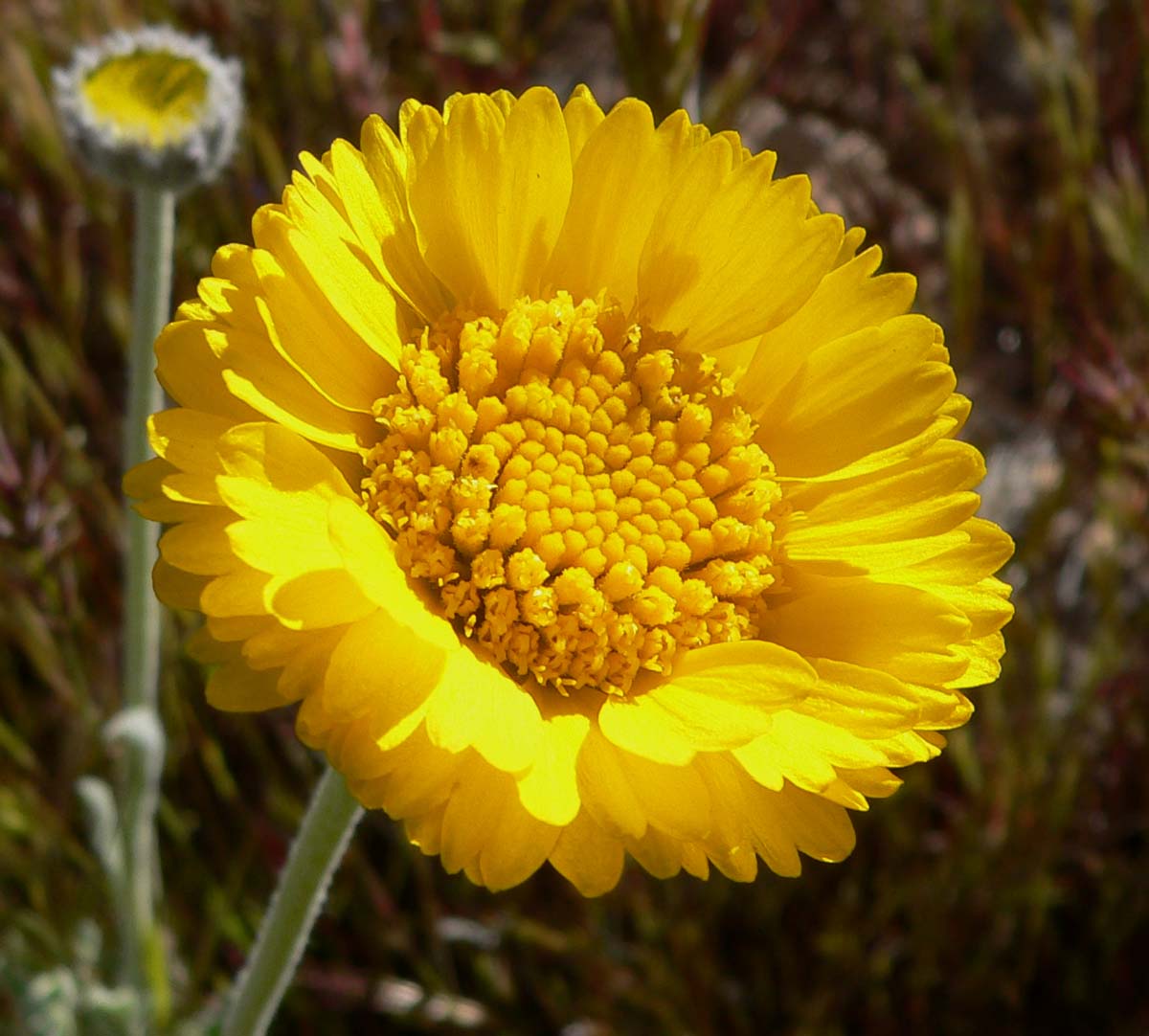 Asteraceae
Desert marigold
Baileya multiradiata
A short-lived mound of woolly gray-green foliage that floats bright lemon-yellow daisies on slender stalks for much of the warm season. A tough, self-seeding wildflower that lines desert roadsides after rains.
✿ Blooms Mar – Oct
 Asparagaceae
Desert spoon
Dasylirion wheeleri
A symmetrical fountain of narrow blue-gray, saw-toothed blades that in maturity sends up a tall dried-flower stalk. An architectural anchor plant of southern NM and a source of the distilled spirit sotol.
✿ Blooms Jun – Jul
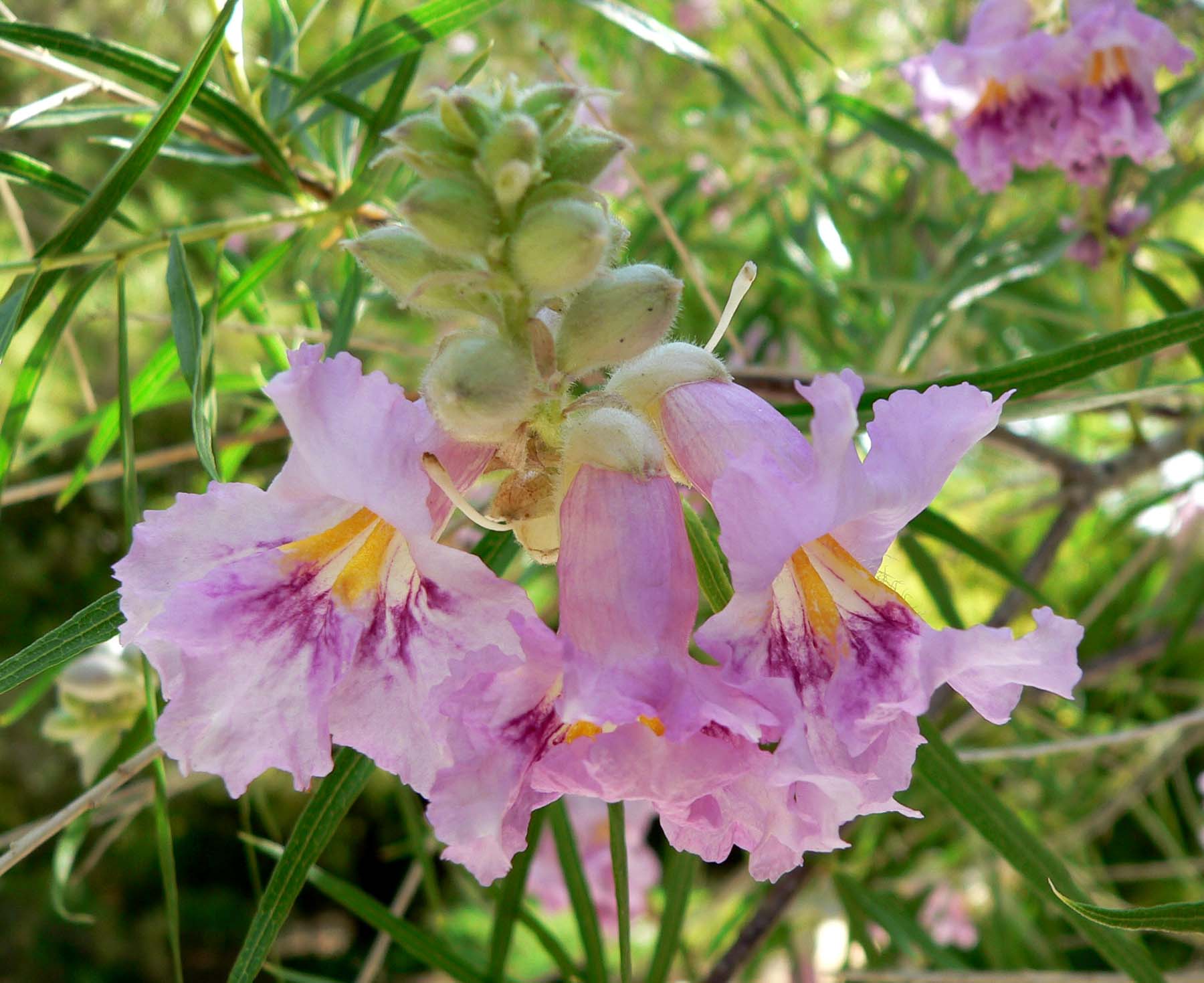 Bignoniaceae
Desert willow
Chilopsis linearis
Not a true willow — a small desert tree with willow-like leaves and orchid-shaped pink-to-burgundy trumpet flowers that hummingbirds work all summer. A signature of washes and low-elevation NM landscapes.
✿ Blooms May – Sep
 Asteraceae
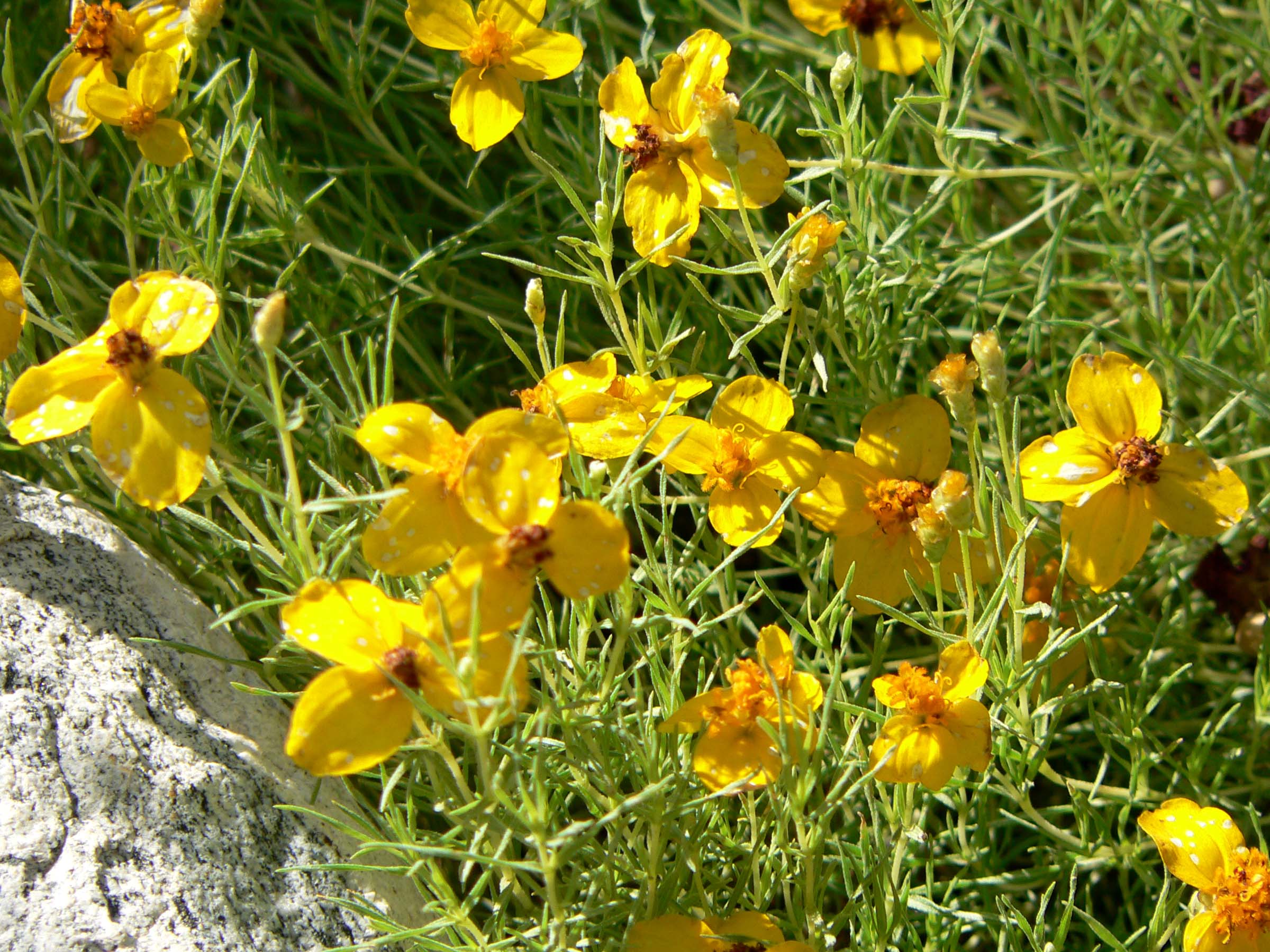
Desert zinnia
Zinnia grandiflora
A low, spreading mat of fine green foliage covered through the hot months in bright golden-yellow daisies that age to papery tan. A drought-proof little groundcover for the toughest sunbaked spots.
✿ Blooms Jun – Oct
 Cactaceae
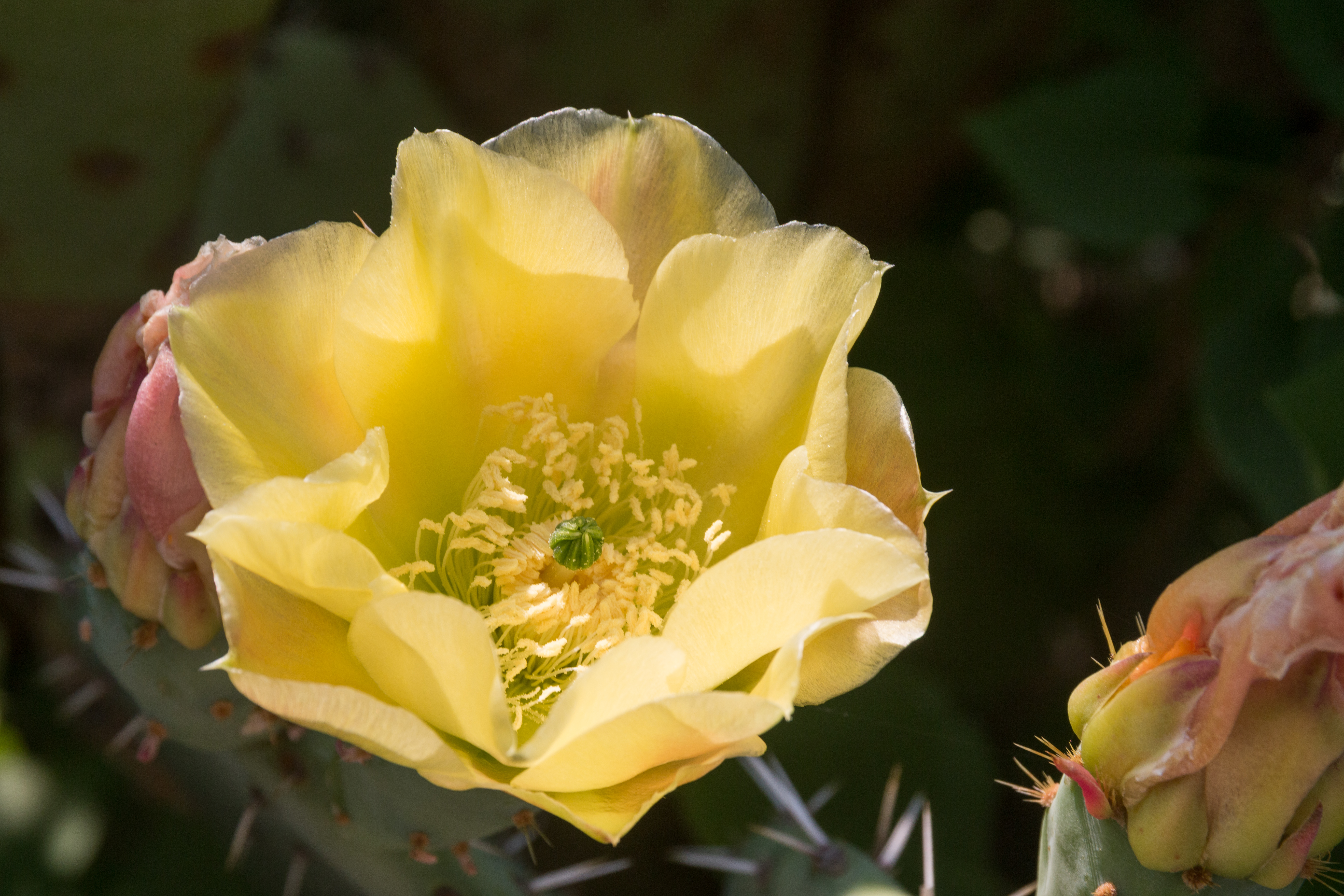
Engelmann's prickly pear
Opuntia engelmannii
The broad blue-green paddle cactus with yellow-to-orange flowers and edible magenta fruit (tunas). The most widespread prickly pear across southern and central NM.
✿ Blooms Apr – Jun
 Fabaceae
Fairy duster
Calliandra eriophylla
A low, airy shrub with fine, ferny compound leaves that erupts in feathery pink-to-rose flower puffs made of long stamens, a favorite of hummingbirds in the lower and southern Southwest. It brings soft color to desert slopes and washes in late winter and spring.
✿ Blooms Feb – May
 Plantaginaceae
Firecracker penstemon
Penstemon eatonii
An upright spring wildflower sending up wands of tubular, brilliant scarlet-red flowers above a basal rosette of glossy green leaves. A hummingbird magnet that lights up desert gardens and roadsides just as spring warms.
✿ Blooms Mar – Jun
 Cactaceae
Fishhook barrel cactus
Ferocactus wislizeni
A stout, ribbed barrel armed with hooked red spines that leans toward the southwest with age, topped in late summer by a crown of orange-to-yellow flowers and, later, yellow pineapple-like fruit. A rugged sculptural fixture of desert slopes.
✿ Blooms Jul – Sep
 Cactaceae
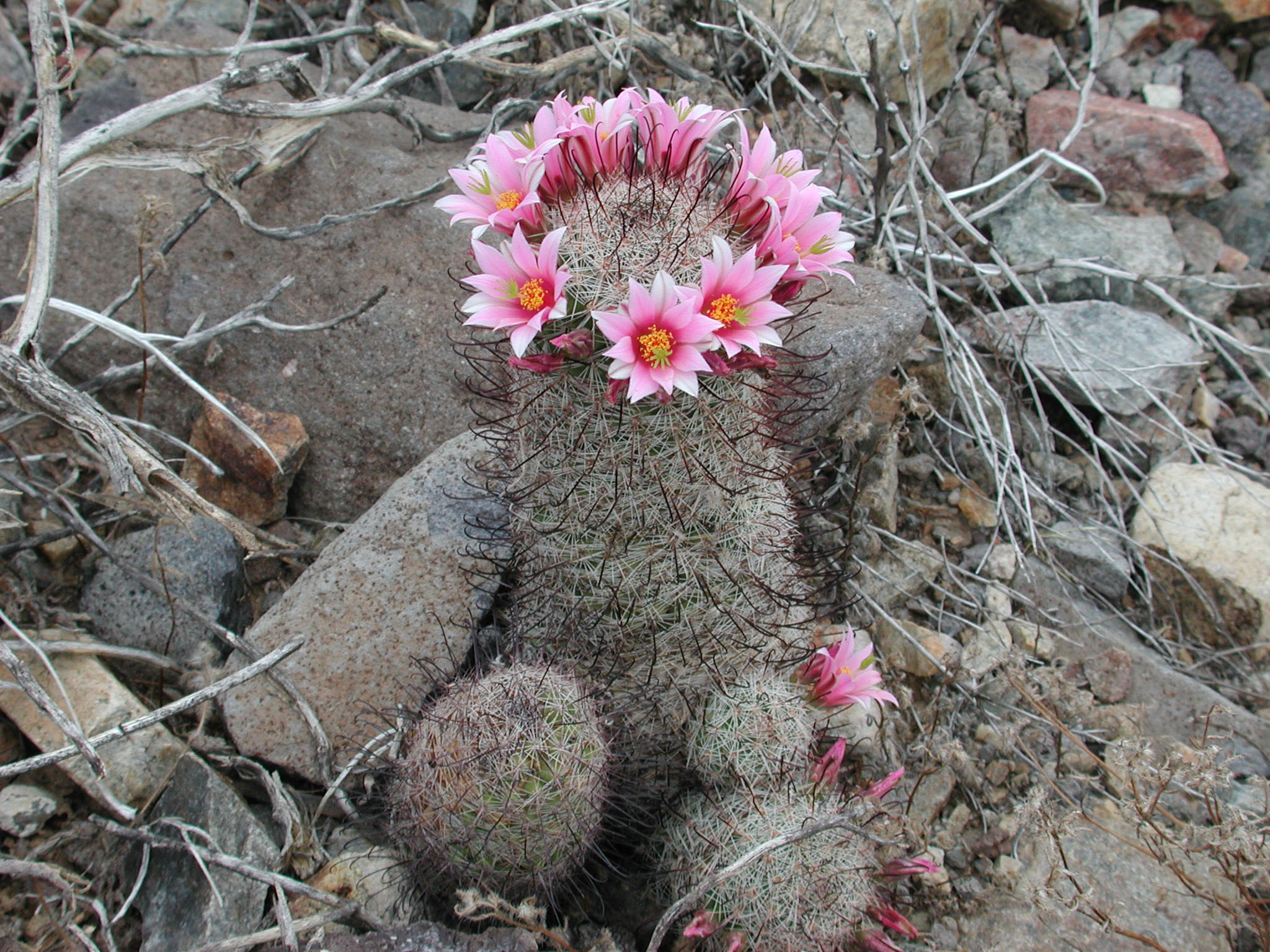
Fishhook pincushion
Mammillaria grahamii
A small, solitary barrel studded with white radial spines and one to several hooked, fishhook-like central spines, easily overlooked among desert rocks. After summer rains it circles its crown with a tidy ring of pink, funnel-shaped flowers, later followed by slender red fruits.
✿ Blooms May – Aug
 Poaceae⚠ Invasive
Fountain grass
Cenchrus setaceus
A tufted bunchgrass with arching, wiry leaves and eye-catching purplish to coppery bottlebrush plumes. Widely sold as an ornamental, it is a non-native invasive that escapes landscaping into wildlands, crowding out natives and carrying fire through desert that rarely burned before.
✿ Blooms May – Oct
 Amaranthaceae
Fourwing saltbush
Atriplex canescens
A gray-green evergreen shrub named for the papery four-winged seeds that clothe the female plants into winter. One of the most salt- and drought-tolerant natives, thriving where little else will.
✿ Blooms Jun – Aug
 Fagaceae
Gambel oak
Quercus gambelii
A deciduous, often thicket-forming oak with lobed leaves that blaze russet and gold in autumn, forming the dense 'oak brush' that carpets foothills and canyon slopes across the Southwest. It anchors soil, feeds wildlife with acorns, and shifts between a shrub and a small gnarled tree depending on site.
✿ Blooms Apr – May
 Zygophyllaceae⚠ Invasive
Goathead
Tribulus terrestris
A ground-hugging annual that spreads flat mats of trailing stems with paired, ferny leaves and small yellow flowers. This non-native invasive is notorious for the hard, sharp-horned burrs it drops — spiny seed cases that puncture bike tires, injure bare feet and pet paws, and hitchhike everywhere.
✿ Blooms Apr – Oct
 Fabaceae
Honey mesquite
Prosopis glandulosa
A deep-rooted legume tree of southern NM with fine feathery leaves, fragrant cream flower spikes, and sugary seed pods. Fixes nitrogen, casts filtered shade, and fuels the classic mesquite smoke.
✿ Blooms Apr – Jun
 Poaceae
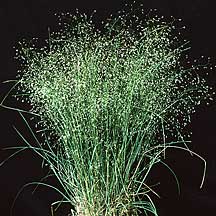
Indian ricegrass
Achnatherum hymenoides
A delicate cool-season bunchgrass whose airy, wide-spreading flower panicles float above fine, threadlike leaves like a shimmering haze. Its plump, nutritious seeds were a staple food for Southwestern peoples and remain prized winter forage.
✿ Blooms May – Jul
 Asparagaceae
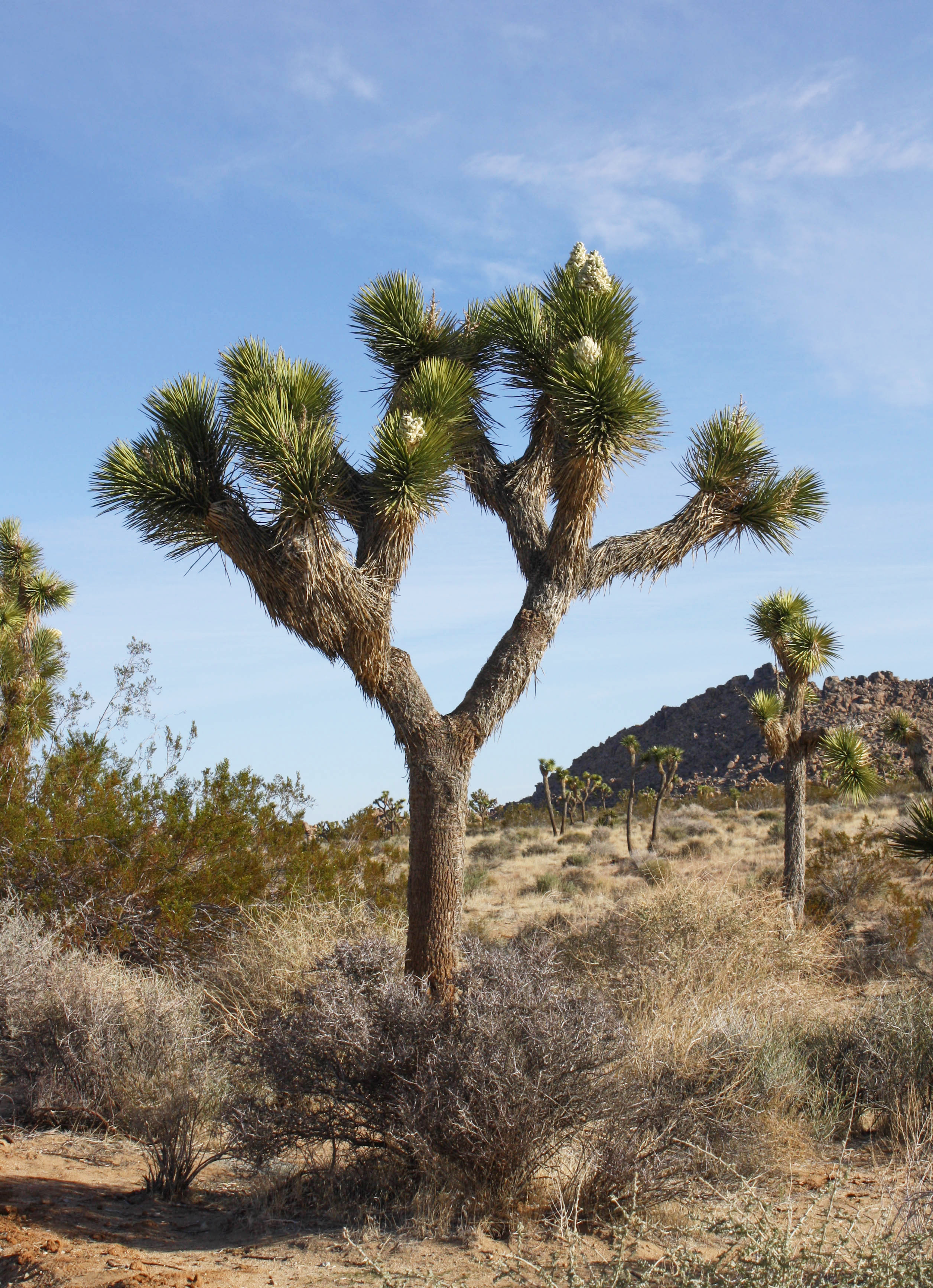
Joshua tree
Yucca brevifolia
The iconic branching tree-yucca of the Mojave, with shaggy forked limbs tipped by dense clusters of stiff, dagger-like leaves and knobby greenish-white spring flower heads. It defines the Mojave skyline and anchors an ecosystem of birds, lizards, and its obligate yucca-moth pollinator.
✿ Blooms Feb – Apr
 Asparagaceae
Lechuguilla
Agave lechuguilla
A clumping agave of stiff, upright, spine-tipped leaves that form tight rosettes carpeting limestone slopes — the classic indicator plant of the Chihuahuan Desert. Once in its life it sends up a tall flowering spike of yellow-to-purplish blooms before the rosette dies, leaving pups to carry on.
✿ Blooms May – Jul
 Papaveraceae
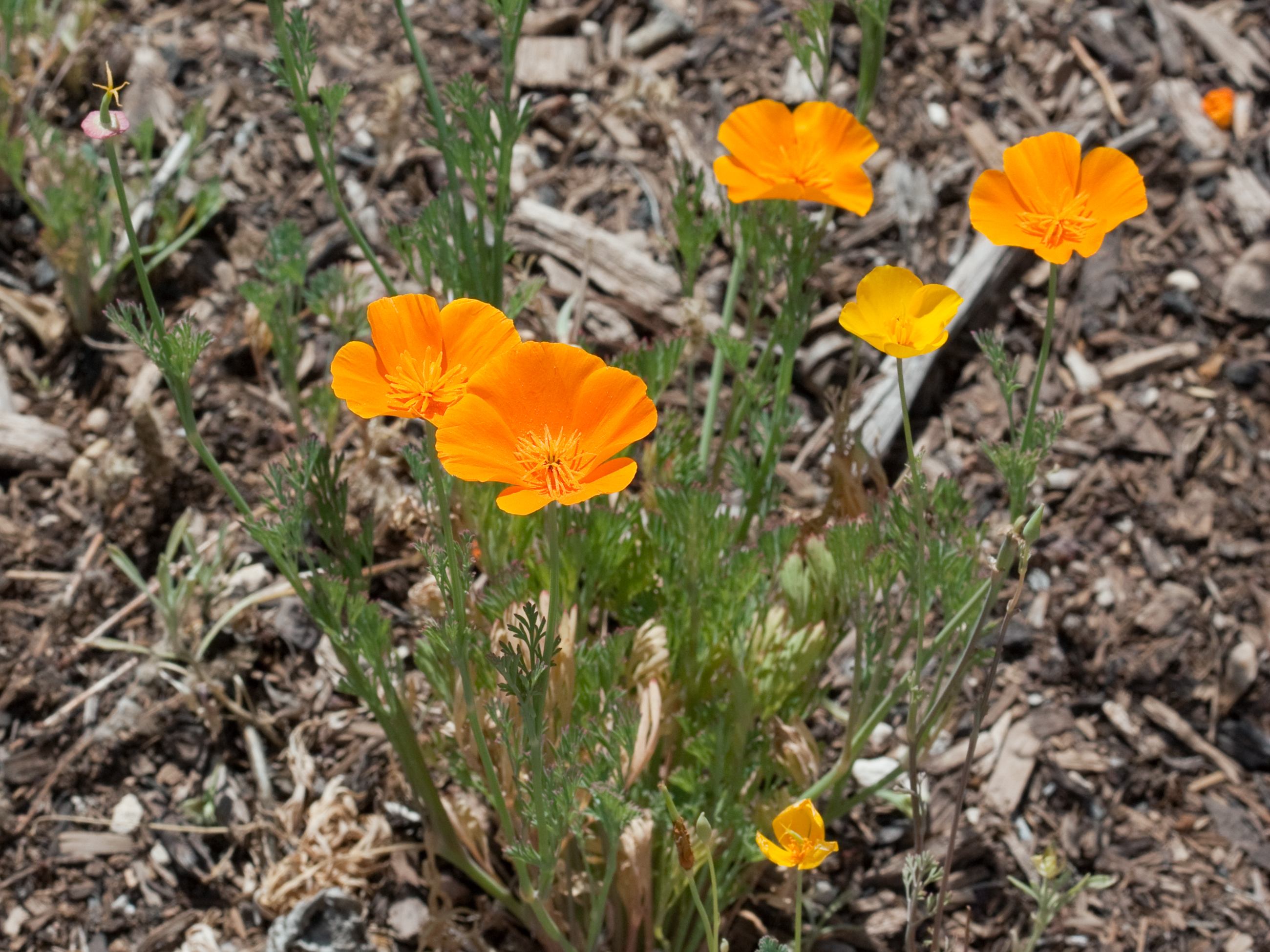
Mexican gold poppy
Eschscholzia californica subsp. mexicana
A spring ephemeral that carpets desert slopes in sheets of glowing golden-orange cups above lacy blue-green foliage after a wet winter. In a good year it turns whole hillsides to gold.
✿ Blooms Feb – Apr
 Ephedraceae
Mormon tea
Ephedra viridis
A stiff, broom-like shrub of slender bright-green, nearly leafless jointed stems that photosynthesize in place of foliage, common on dry mesas and rocky slopes. Its clean architectural form stays green year-round in the high desert.
 Rosaceae
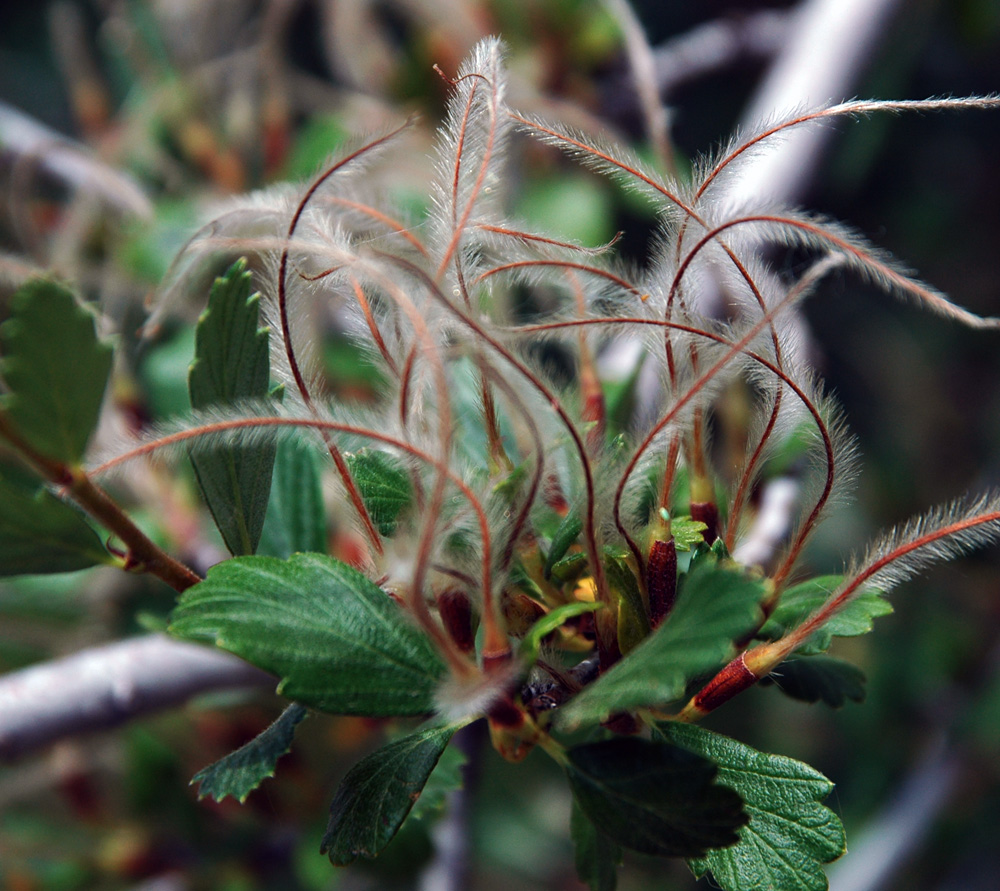
Mountain mahogany
Cercocarpus montanus
A tough, upright deciduous shrub of rocky slopes, prized for the silvery, spiraling feathery plumes that trail from its seeds and catch the light like curls of smoke. Its small wedge-shaped leaves and dense form make it a quiet backbone of foothill chaparral.
✿ Blooms Apr – Jun
 Asparagaceae
New Mexico agave
Agave neomexicana
A compact, cold-hardy agave forming tidy gray-green rosettes with dark spine-tipped leaves, native to the grasslands and rocky slopes of New Mexico and adjacent regions. In summer it throws a branched flower stalk with yellow blooms before the parent rosette dies.
✿ Blooms Jun – Jul
 Fouquieriaceae
Ocotillo
Fouquieria splendens
A fan of long, thorny, whip-like canes that leaf out green after rain and go bare in drought, tipped in spring with brilliant crimson flame-shaped flower clusters. A signature silhouette of Sonoran and Chihuahuan hillsides and a hummingbird magnet.
✿ Blooms Mar – Jun
 Cupressaceae
One-seed juniper
Juniperus monosperma
The gnarled, multi-trunked juniper that with piñon defines the NM foothills 'PJ' woodland. Blue berry-like cones feed birds through winter; a slow, nearly indestructible native.
 Solanaceae
Pale wolfberry
Lycium pallidum
A spiny, spreading shrub with pale blue-green leaves and nodding, greenish-cream to lavender-tinged tubular flowers that give way to reddish berries. Often found around old dwellings and archaeological sites, it hums with hummingbirds and bees in spring.
✿ Blooms Apr – Jun
AsparagaceaeParry’s agave
Agave parryi
A tight, almost geometric rosette of chalky blue-gray leaves edged with dark teeth and tipped by a single black spine. One of the most cold-hardy agaves — native to the mountains of the Southwest — and a sculptural anchor for high-desert gardens.
✿ Blooms Jun – Aug
 Pinaceae
Piñon pine
Pinus edulis
New Mexico's state tree — a compact, rounded pine that produces the prized piñon nut in good years. Paired with juniper across millions of acres of high desert.
 Cactaceae
Plains prickly pear
Opuntia polyacantha
A low, sprawling, mat-forming prickly pear whose green pads are densely armored with long, spreading spines. Exceptionally cold-hardy, it ranges from high-desert grasslands far up into the plains and mountain West, brightening spring with waxy yellow flowers.
✿ Blooms May – Jul
 Pinaceae
Ponderosa pine
Pinus ponderosa
A stately, long-needled pine whose thick, plated bark smells of vanilla or butterscotch in the sun and glows cinnamon-orange on mature trunks. It defines the open, park-like forests of the Southwest's mid-to-high elevations.
 Cactaceae
Rainbow hedgehog cactus
Echinocereus rigidissimus
A solitary, cylindrical hedgehog cactus whose dense, comb-like spines form alternating bands of pink, white, and rust that spiral up the stem like a rainbow. In late spring it crowns itself with large, silky magenta flowers with paler throats — one of the desert's most photographed miniatures.
✿ Blooms Apr – Jun
 Asparagaceae
Red yucca
Hesperaloe parviflora
A grassy clump of arching, blue-green succulent leaves that sends up tall wands of coral-pink tubular flowers for months, one of the top hummingbird plants in Southwest landscapes. Despite the name it is not a true yucca.
✿ Blooms May – Sep
 Salicaceae
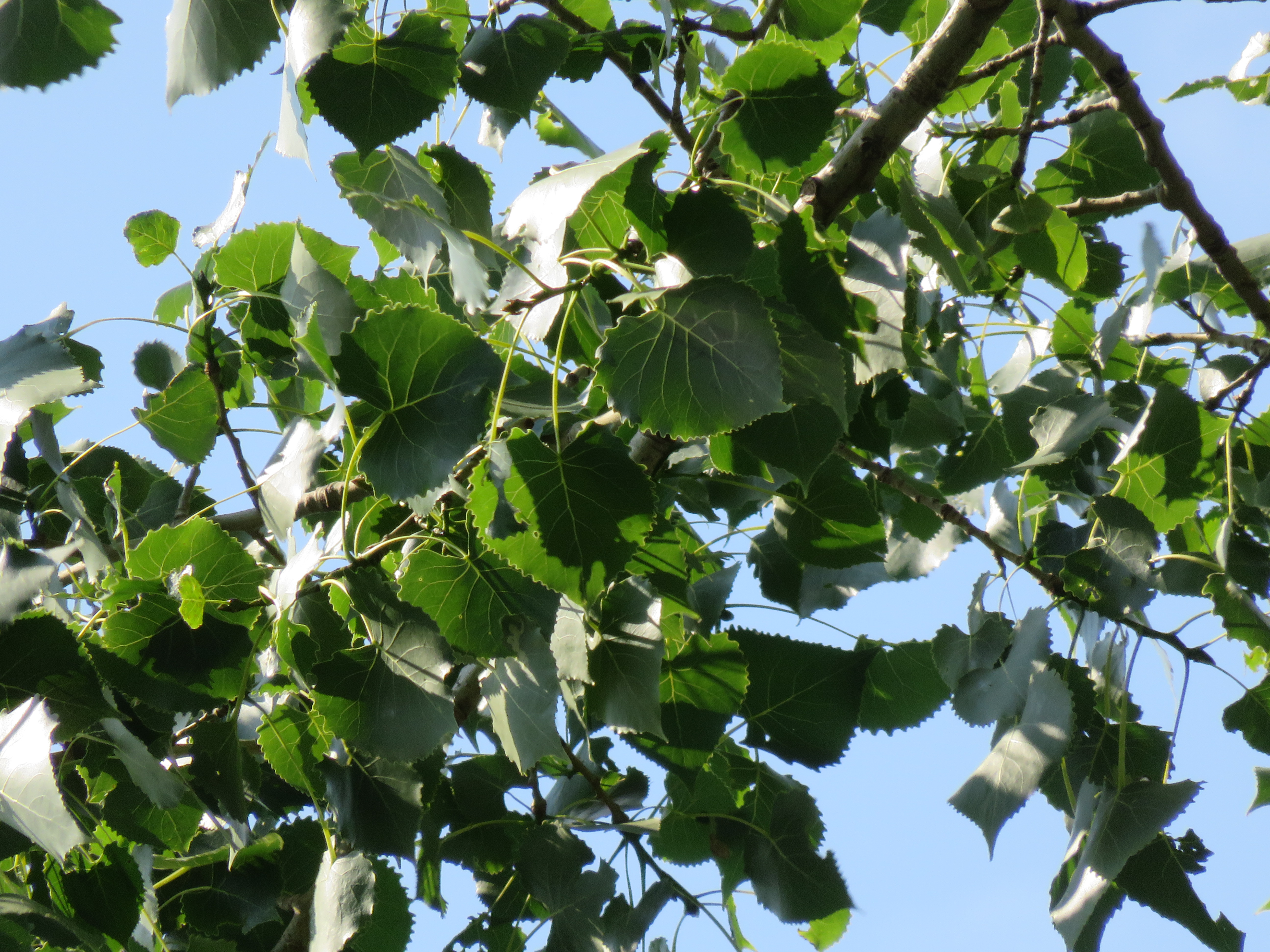
Rio Grande cottonwood
Populus deltoides wislizeni
The great gallery tree of the bosque — massive, spreading cottonwoods whose golden fall color lines the Rio Grande. A true riparian species that needs a water table or a ditch, not a dry yard.
✿ Blooms Mar – Apr
 Asteraceae
Rubber rabbitbrush
Ericameria nauseosa
The quintessential late-summer roadside shrub of northern New Mexico — silvery, flexible stems topped by a haze of golden flowers that carry the mesa gold from August into October.
✿ Blooms Aug – Oct
 Amaranthaceae⚠ Invasive
Russian thistle
Salsola tragus
A bushy, much-branched annual with slender reddish-striped stems and needle-tipped leaves that form a rounded skeleton by fall. This non-native invasive dries, snaps off at the base, and tumbles across the landscape scattering tens of thousands of seeds, piling against fences and fueling fires.
✿ Blooms Jun – Oct
 Asparagaceae
Sacahuista
Nolina microcarpa
A large, grasslike mound of long, narrow, arching leaves with finely toothed edges, forming a fountain on rocky Southwest slopes. In early summer it sends up plumes of tiny creamy flowers well above the foliage.
✿ Blooms May – Jul
 Solanaceae
Sacred datura
Datura wrightii
A sprawling, gray-green mound with huge white, trumpet-shaped flowers that open at dusk and perfume the night to attract hawkmoths. Dramatic and beautiful — but every part is dangerously poisonous.
✿ Blooms May – Oct
 Cactaceae
Saguaro
Carnegiea gigantea
The towering, many-armed giant that defines the Sonoran Desert, its pleated green column crowned in late spring with waxy white flowers. A slow-growing keystone that shelters and feeds desert wildlife for well over a century.
✿ Blooms May – Jun
 Tamaricaceae⚠ Invasive
Saltcedar
Tamarix ramosissima
A feathery, gray-green shrub or small tree with tiny scale-like leaves and showy pink to whitish flower plumes. A non-native invasive that forms dense thickets choking Southwest rivers, guzzling groundwater and salting the soil so native cottonwoods and willows can't compete.
✿ Blooms Apr – Sep
 Cactaceae
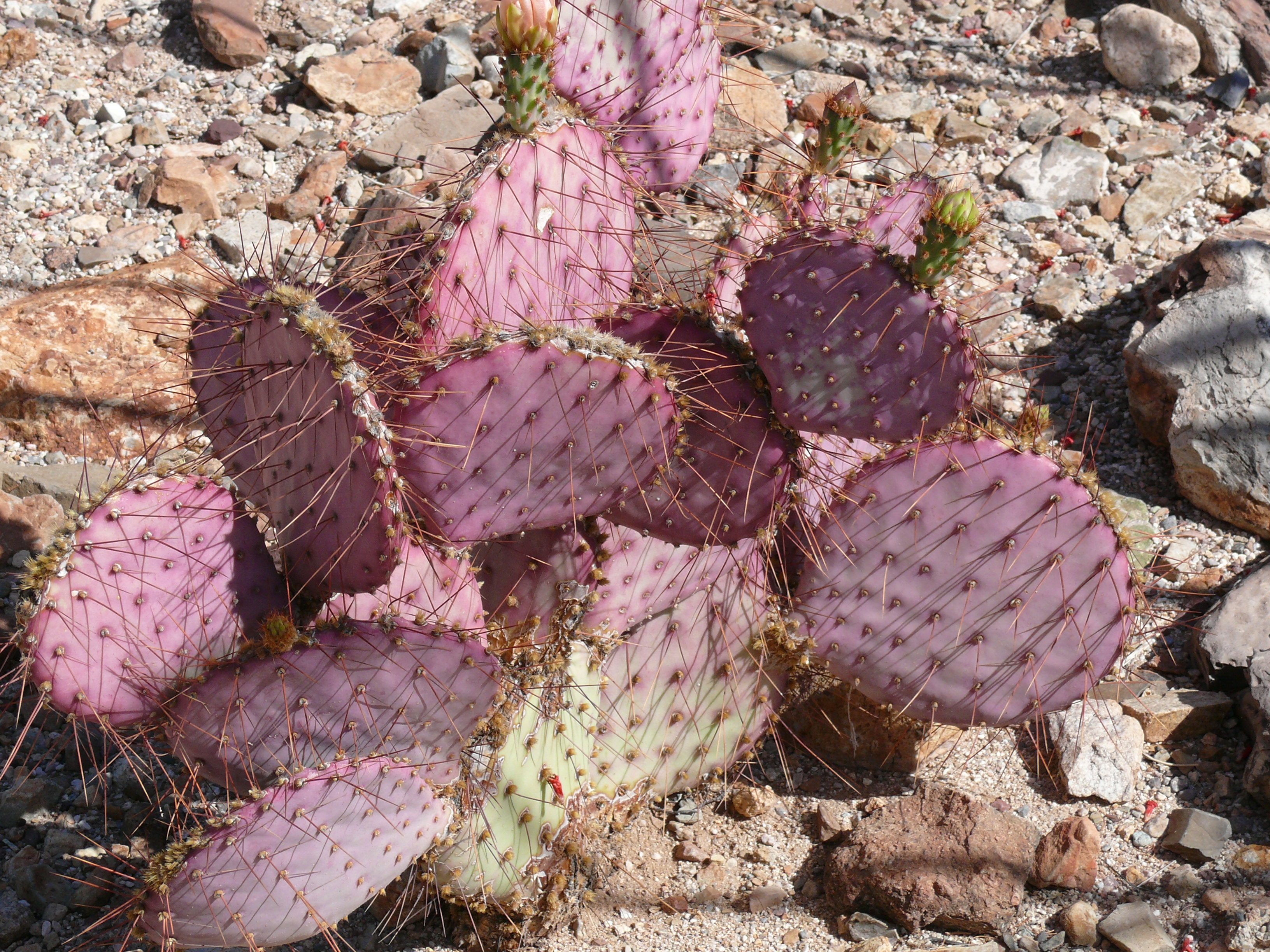
Santa-Rita prickly pear
Opuntia santa-rita
A striking upright prickly pear whose round blue-gray pads flush vivid purple to lavender under cold and drought stress. Bright yellow spring flowers against the purple pads make it a prized ornamental of the Sonoran and Chihuahuan borderlands.
✿ Blooms Apr – Jun
 Plantaginaceae
Scarlet bugler
Penstemon barbatus
Tall wands of tubular scarlet flowers held above a basal rosette, timed to the summer hummingbird migration. One of the easiest and most rewarding native penstemons for the high desert.
✿ Blooms Jun – Sep
 Malvaceae
Scarlet globemallow
Sphaeralcea coccinea
A low, spreading perennial with grayish deeply cut leaves and abundant apricot-to-brick-orange mallow flowers through the warm months. A tough, cheerful groundcover for hot exposed ground.
✿ Blooms Apr – Sep
 Poaceae
Sideoats grama
Bouteloua curtipendula
A warm-season bunchgrass named for the row of small oat-like seed spikes that dangle uniformly along one side of each arching stem, often flushed with orange and purple anthers. The Texas state grass and a tough, palatable forage grass.
✿ Blooms Jul – Sep
 Asparagaceae
Soaptree yucca
Yucca elata
A slender tree-yucca topped with a rounded head of narrow, grass-like blue-green leaves and towering summer spikes of creamy bell-shaped flowers. A signature plant of Chihuahuan Desert grasslands, its saponin-rich roots were long pounded into soap (amole).
✿ Blooms May – Jul
 Asparagaceae
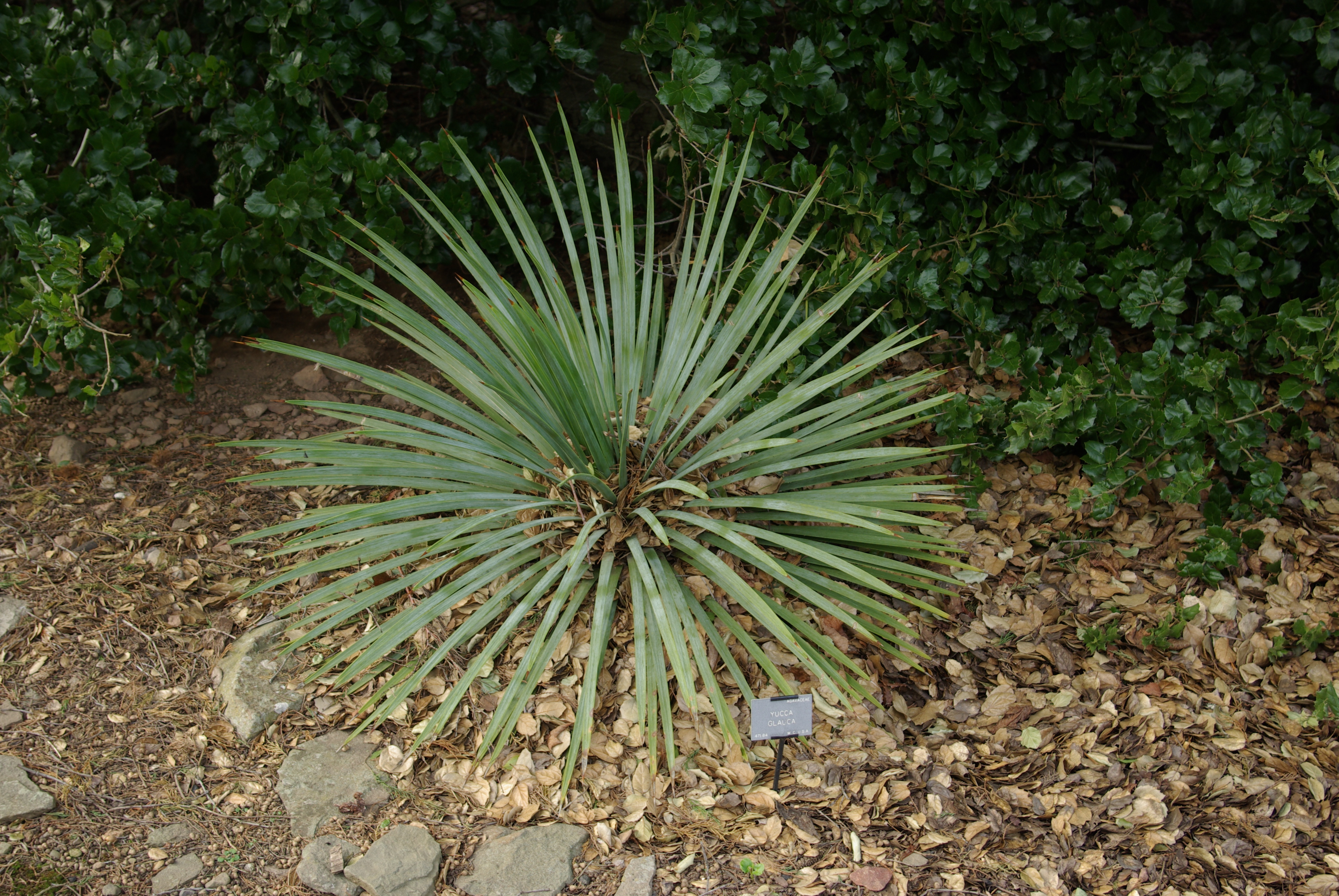
Soapweed yucca
Yucca glauca
A low rosette of narrow blue-green blades that throws a tall spike of creamy bell flowers in early summer, pollinated exclusively by the yucca moth. Common on grassland and mesa across NM.
✿ Blooms May – Jul
 Cactaceae
Teddy bear cholla
Cylindropuntia bigelovii
A small treelike cholla whose densely silver-spined joints glow when backlit, giving a deceptively soft, fuzzy look. Its detachable segments cling ferociously to anything that brushes them, earning the 'jumping cholla' name.
✿ Blooms Feb – May
 Cactaceae
Tree cholla
Cylindropuntia imbricata
The upright, many-armed cholla that dots NM grasslands, with magenta flowers in early summer and persistent yellow tubercled fruit. Dead stems dry into the hollow 'cholla wood' sold in curio shops.
✿ Blooms May – Jul
 Amaranthaceae
Winterfat
Krascheninnikovia lanata
A soft, low, silvery-white shrub whose woolly, star-haired foliage and fluffy seed tufts glow almost luminous in late-season light, blanketing flats and mesas in silver. Its dense winter seed heads give it both its name and its value as cold-season forage.