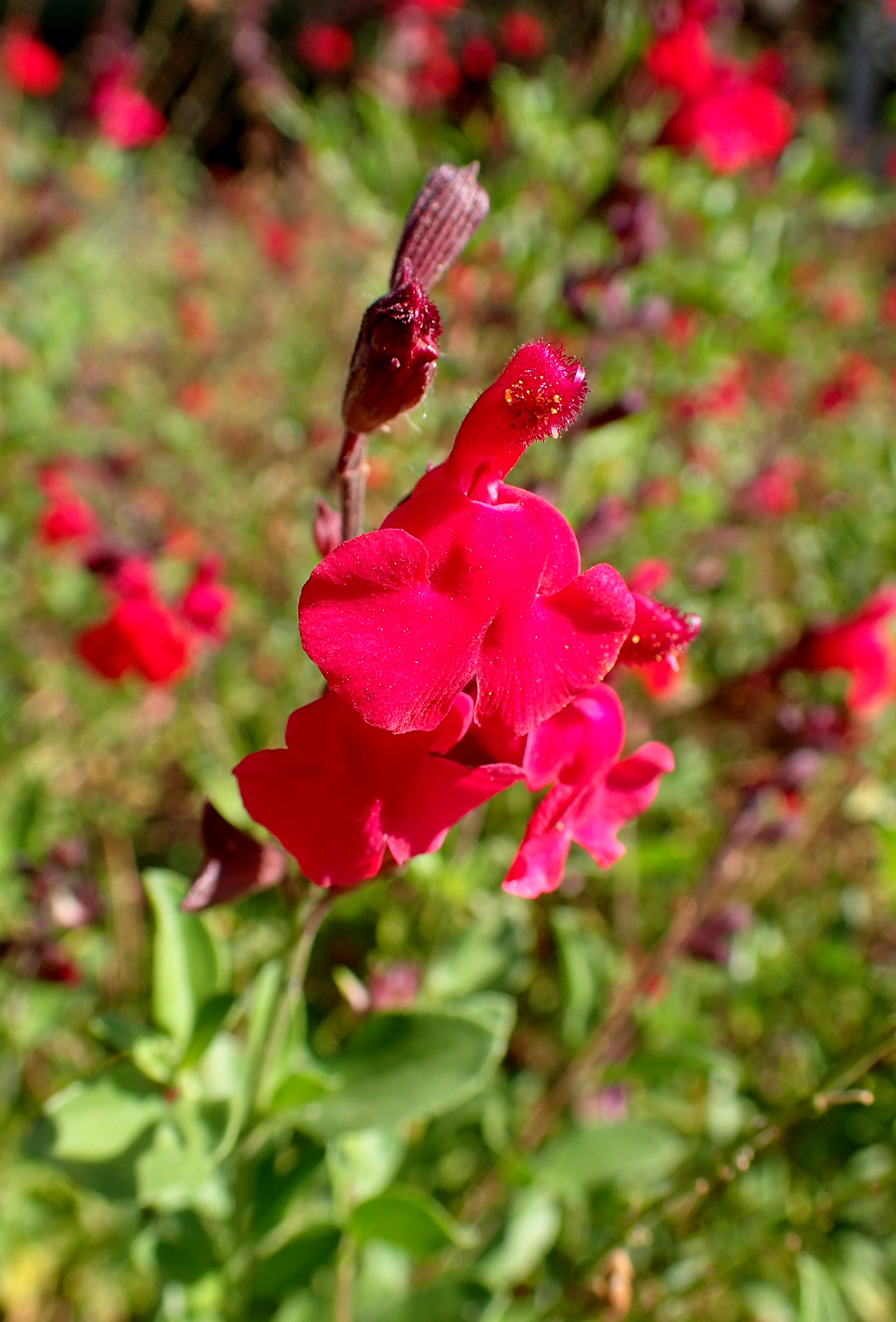
 Krzysztof Ziarnek, Kenraiz · CC BY-SA 4.0
also Gregg's sage
Autumn sage
Salvia greggii
- Family:
- Lamiaceae
- Elevation:
- 3,000 ft – 6,000 ft
- Bloom:
- Mar – Nov
- Region:
- Southwest
A compact, aromatic subshrub covered for months in small lipped flowers in shades of red, coral, pink, or white. A workhorse of Southwest gardens and a reliable draw for hummingbirds and bees.
Care · tuned to the Southwest
Water
Moderately drought tolerant; performs best with occasional deep summer irrigation but tolerates dry spells. Overwatering leads to legginess and root rot in poorly drained soil. Responds to monsoon moisture with a fresh flush of bloom.
Sun & exposure
Full sun to light afternoon shade; handles reflected heat, though some afternoon shade keeps it fuller in the hottest low-desert sites.
Soil
Needs good drainage; thrives in gravelly, sandy, or rocky ground and tolerates alkaline and caliche soils. Avoid soggy, heavy clay.
In the Southwest
Cold hardy to roughly 10-15°F; may die back in hard winters and resprout. Shear back by a third to a half in late winter, and lightly again midsummer, to keep it dense and reblooming. Excellent long-season hummingbird and bee plant.
Common problems & fixes
Gets woody, leggy, and bare-based without shearing
Fix — Shear back by a third after each bloom flush and cut hard in late winter to renew it.
Root rot in wet or clay soil
Fix — Plant in well-drained soil, water moderately, and avoid soggy conditions, especially in summer.
Pets & toxicity
Not considered toxic to dogs or cats.
Easy to confuse with
- Mountain sage (Salvia microphylla) — larger, often rounder leaves; the two hybridize freely
- Cenizo / Texas ranger (Leucophyllum frutescens) — silver-leaved and unrelated, with bell-shaped purple flowers
Sources
Think you're looking at one?
Snap a photo and we'll rank the candidates against the local flora — honestly, and for free.
Identify a plant