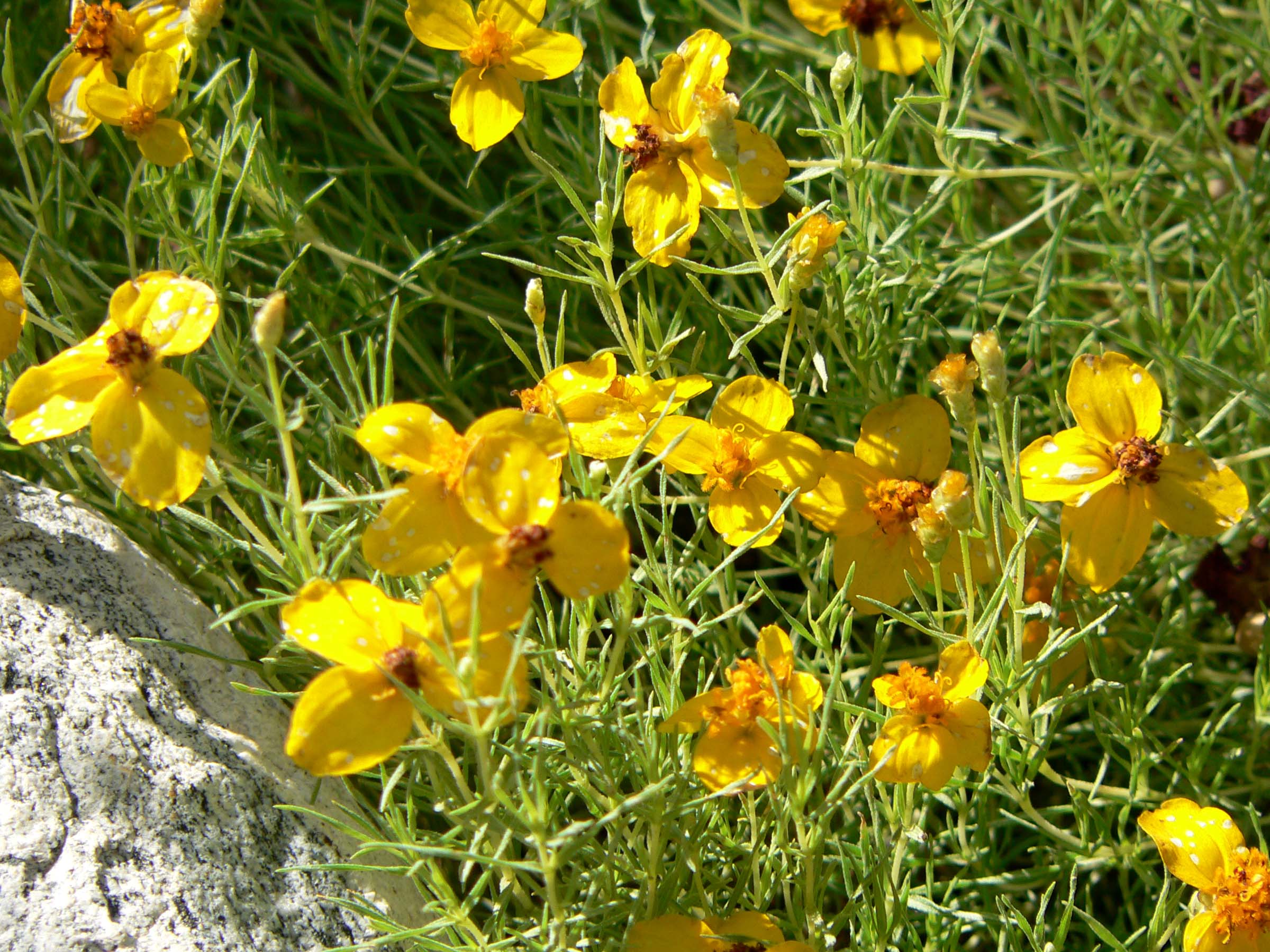
 Stan Shebs · CC BY-SA 3.0
also Plains zinnia
Desert zinnia
Zinnia grandiflora
- Family:
- Asteraceae
- Elevation:
- 3,000 ft – 7,000 ft
- Bloom:
- Jun – Oct
- Region:
- Southwest
A low, spreading mat of fine green foliage covered through the hot months in bright golden-yellow daisies that age to papery tan. A drought-proof little groundcover for the toughest sunbaked spots.
Care · tuned to the Southwest
Water
Exceptionally drought tolerant; thrives on rainfall alone once established. Overwatering rots it and causes rank growth. Comes into peak bloom with summer monsoon moisture.
Sun & exposure
Full, open sun and reflected heat; needs strong light to bloom well and stay compact.
Soil
Wants lean, gritty, fast-draining soil; excels in rocky, gravelly, sandy, and alkaline or caliche ground. Dislikes rich or wet soil.
In the Southwest
Cold hardy to around 0°F; dies back and returns in late spring. Spreads slowly by rhizomes to form a mat and reseeds. Shear off faded flowers to tidy. A late-summer nectar plant for butterflies and small bees.
Common problems & fixes
Root rot from overwatering — crowns rot in rich, moist, or poorly drained soil
Fix — Site in lean, sharply drained soil in full sun and water infrequently, especially in monsoon humidity.
Warm-season dormancy looks dead — browns out in cold and gets pulled
Fix — Leave dormant plants alone through winter; they leaf out again from the roots once soil warms.
Pets & toxicity
Not known to be toxic to dogs or cats.
Easy to confuse with
- White desert zinnia (Zinnia acerosa) — white to cream petals
- Damianita (Chrysactinia mexicana) — yellow daisies with aromatic needle-like foliage
Sources
Think you're looking at one?
Snap a photo and we'll rank the candidates against the local flora — honestly, and for free.
Identify a plant