 Bernard Gagnon · CC BY-SA 3.0
also Tree yucca
Joshua tree
Yucca brevifolia
- Family:
- Asparagaceae
- Elevation:
- 1,300 ft – 5,900 ft
- Bloom:
- Feb – Apr
- Region:
- Southwest
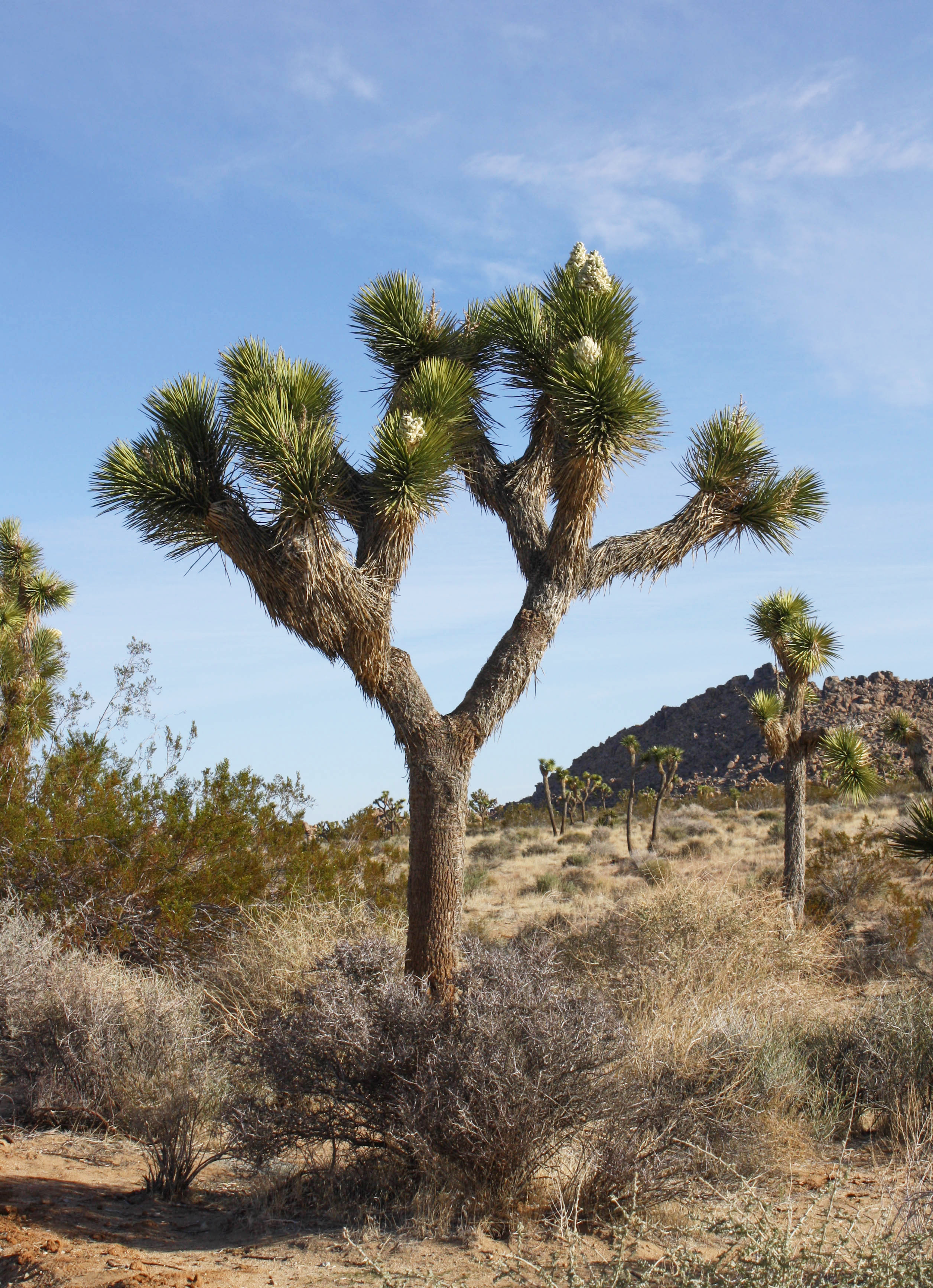
The iconic branching tree-yucca of the Mojave, with shaggy forked limbs tipped by dense clusters of stiff, dagger-like leaves and knobby greenish-white spring flower heads. It defines the Mojave skyline and anchors an ecosystem of birds, lizards, and its obligate yucca-moth pollinator.
Care · tuned to the Southwest
Water
Very drought tolerant; needs occasional deep soaks only during establishment and prolonged drought. Overwatering and summer irrigation readily trigger root and trunk rot.
Sun & exposure
Full sun with excellent tolerance of intense heat and reflected glare.
Soil
Requires gritty, sharply drained sandy or decomposed-granite soil; will not tolerate soggy or clay-heavy ground.
In the Southwest
A Mojave endemic hardy to about 0–10°F but stressed by climates outside its range. Leaves are needle-sharp. Notoriously slow-growing, deep-rooted, and very hard to transplant — best grown from seed and left in place.
Common problems & fixes
Transplant failure — slow, often fatal decline after moving
Fix — Avoid transplanting established trees; start from seed or nursery stock and disturb roots as little as possible.
Root/trunk rot from overwatering
Fix — Plant in gritty fast-draining soil and never irrigate on a lawn schedule, especially in summer heat.
Pets & toxicity
Not highly toxic, but saponins can cause mild GI upset if eaten; the primary hazard is mechanical — extremely sharp, rigid leaf tips that can injure eyes and paws.
Easy to confuse with
- Mojave yucca (Yucca schidigera) — unbranched or few-stemmed with longer leaves
- Soaptree yucca (Yucca elata) — narrower flexible leaves and a slimmer, less-branched trunk
Sources
Think you're looking at one?
Snap a photo and we'll rank the candidates against the local flora — honestly, and for free.
Identify a plant