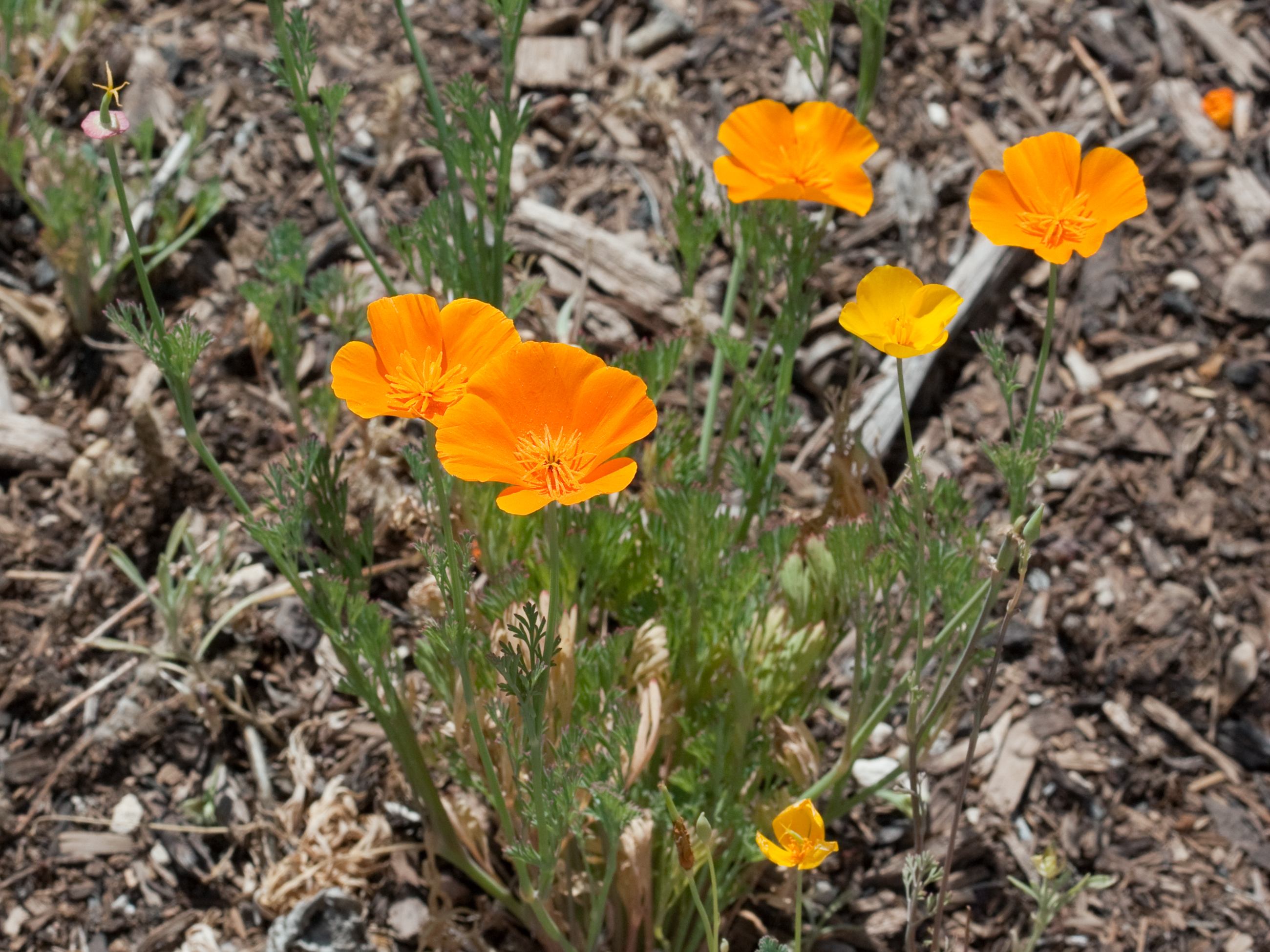
 Kaldari · CC0
also Desert gold poppy
Mexican gold poppy
Eschscholzia californica subsp. mexicana
- Family:
- Papaveraceae
- Elevation:
- 1,000 ft – 5,000 ft
- Bloom:
- Feb – Apr
- Region:
- Southwest
A spring ephemeral that carpets desert slopes in sheets of glowing golden-orange cups above lacy blue-green foliage after a wet winter. In a good year it turns whole hillsides to gold.
Care · tuned to the Southwest
Water
A winter-germinating annual that depends on autumn and winter rains; it needs moist soil to sprout and grow, then finishes and dies as the desert dries in late spring. No summer water needed. Bloom depends heavily on winter rainfall — sparse in dry years.
Sun & exposure
Full sun; flowers open in bright light and close on cloudy days and at night.
Soil
Prefers sandy, gravelly, well-drained desert soils; tolerates rocky and alkaline ground. Sow seed on disturbed, open sites in fall.
In the Southwest
A true annual — reseeds itself for future springs, so let plants set seed before they dry. Not reliably showy every year; a wet winter produces the best displays. Provides early nectar and pollen for bees. Sow in place; it resents transplanting.
Common problems & fixes
No-show in dry years — this winter annual barely germinates without fall/winter rain
Fix — Sow seed in fall and rely on winter moisture; accept sparse displays in drought years.
Resents transplanting — its taproot makes moved seedlings fail
Fix — Direct-sow seed where plants are to grow rather than transplanting.
Pets & toxicity
Generally considered low toxicity; contains mild alkaloids and is not a common cause of serious poisoning, but ingestion may cause minor stomach upset in pets.
Easy to confuse with
- California poppy (E. californica subsp. californica) — larger with a wider flower rim
- Desert marigold (Baileya multiradiata) — yellow-orange daisies, not four-petaled poppy cups
Sources
Think you're looking at one?
Snap a photo and we'll rank the candidates against the local flora — honestly, and for free.
Identify a plant