 Wikimedia Commons
also Alamo
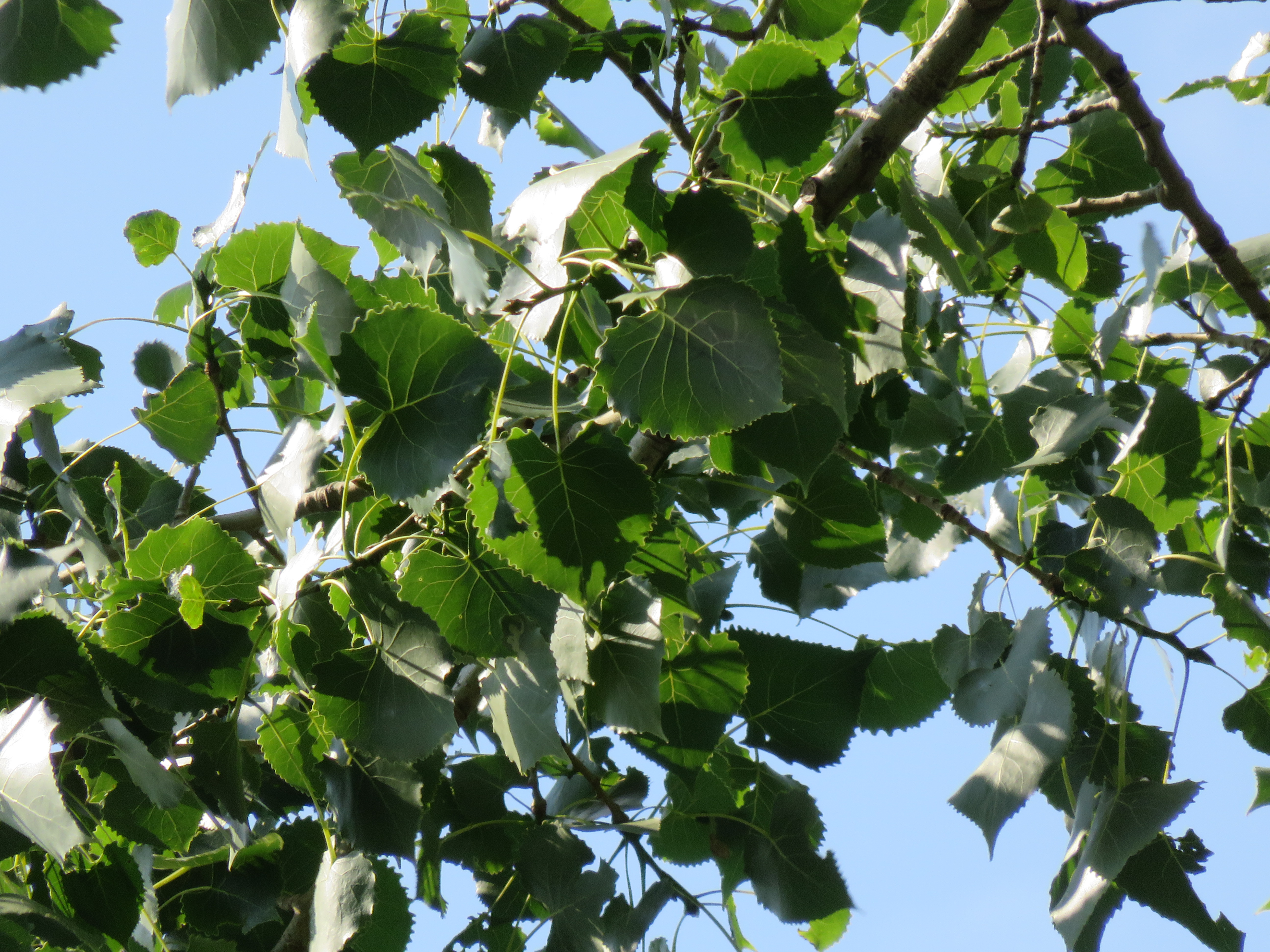
Rio Grande cottonwood
Populus deltoides wislizeni
- Family:
- Salicaceae
- Elevation:
- 3,000 ft – 7,000 ft
- Bloom:
- Mar – Apr
- Region:
- Southwest
The great gallery tree of the bosque — massive, spreading cottonwoods whose golden fall color lines the Rio Grande. A true riparian species that needs a water table or a ditch, not a dry yard.
Care · tuned to the Southwest
Water
The exception to high-desert dry gardening: it needs abundant, deep water and naturally grows where roots reach groundwater. Do not plant it expecting xeric care — it will decline and drop limbs.
Sun & exposure
Full sun.
Soil
Deep alluvial soil along rivers and acequias; tolerates periodic flooding.
In the Southwest
Fast, brittle, and short-lived for its size — limbs shed in wind, so keep it away from structures. Female trees release the summer 'cotton.' Best appreciated in the bosque rather than a small lot; plan for a big, thirsty, messy tree if you plant one.
Common problems & fixes
Aphids and sticky honeydew — heavy infestations coat leaves and surfaces in residue and sooty mold
Fix — Hose off colonies, avoid overfertilizing, and tolerate them as a seasonal nuisance on strong trees.
Brittle limb drop — fast, weak wood sheds large branches in monsoon winds
Fix — Prune structurally while young for good branch angles and remove overextended limbs before storm season.
Cotton litter, borers, and mistletoe — female trees shed cotton; stressed trees get borers and mistletoe
Fix — Plant cottonless male cultivars, keep trees vigorous with deep watering, and prune out mistletoe and dead wood.
Pets & toxicity
Non-toxic.
Easy to confuse with
- Lanceleaf cottonwood (Populus x acuminata) — narrower leaves, higher elevation
- Siberian elm (Ulmus pumila) — invasive, often confused from a distance
Sources
Think you're looking at one?
Snap a photo and we'll rank the candidates against the local flora — honestly, and for free.
Identify a plant