 Mike and Zahra · CC BY-SA 2.0
also Graham's nipple cactus
Fishhook pincushion
Mammillaria grahamii
- Family:
- Cactaceae
- Elevation:
- 1,500 ft – 5,000 ft
- Bloom:
- May – Aug
- Region:
- Southwest
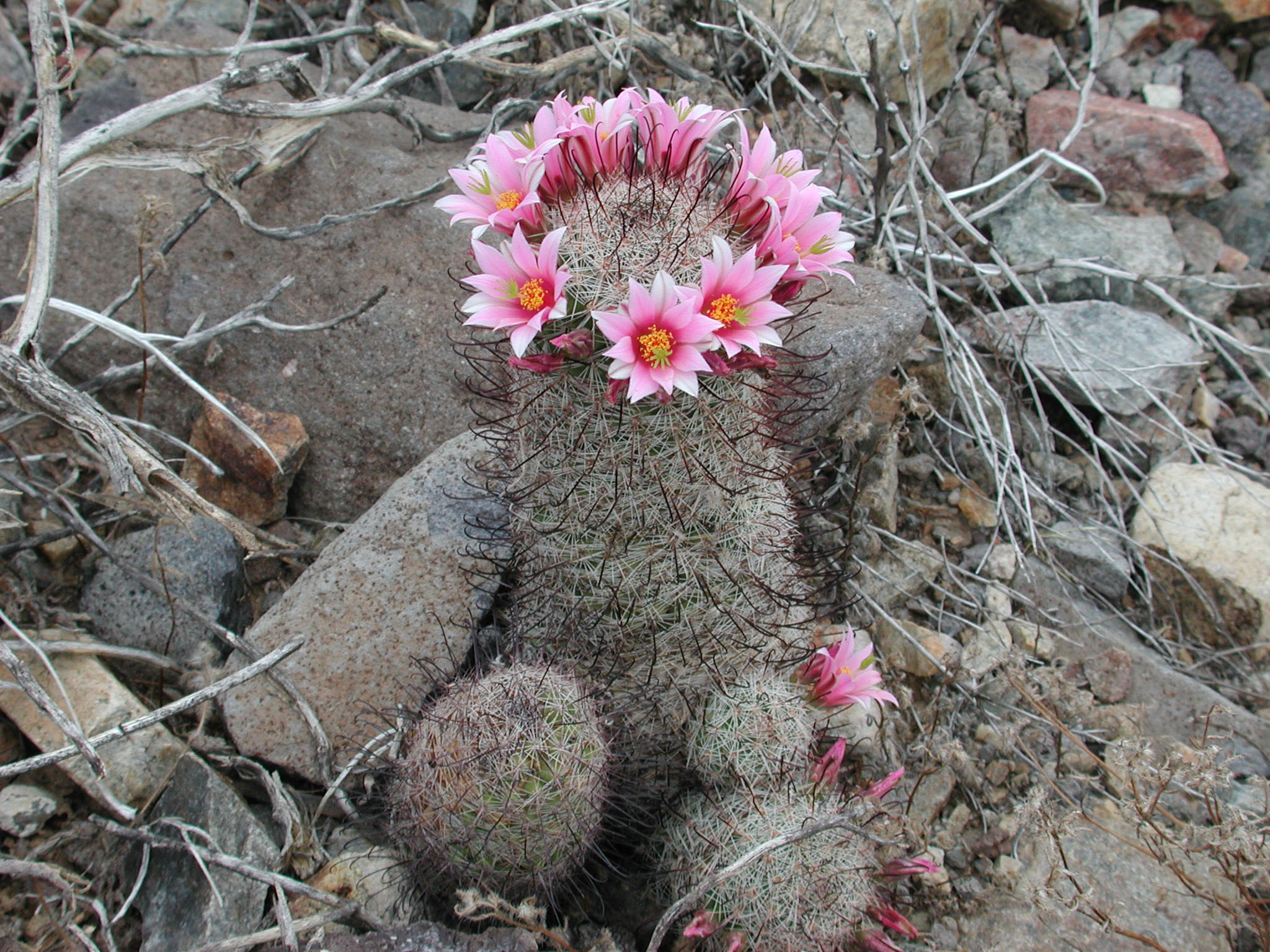
A small, solitary barrel studded with white radial spines and one to several hooked, fishhook-like central spines, easily overlooked among desert rocks. After summer rains it circles its crown with a tidy ring of pink, funnel-shaped flowers, later followed by slender red fruits.
Care · tuned to the Southwest
Water
Drought tolerant with a strong summer-monsoon rhythm; water during warm rains and keep dry in winter. Prone to rot if overwatered or grown in dense soil.
Sun & exposure
Full sun to very light shade; appreciates some afternoon relief in the hottest lowlands.
Soil
Needs gritty, sharply draining, alkaline desert soil; excellent drainage is essential.
In the Southwest
Cold-hardy to about 15–20°F when dry. The hooked central spines readily catch skin, clothing, and fur and are tricky to extract. A collector favorite — buy only nursery-propagated plants.
Common problems & fixes
Basal rot from overwatering, especially in winter
Fix — Grow in fast-draining gritty mix, water on a summer rhythm, and keep dry and cool in dormancy.
Hooked spines snag skin, pets, or clothing
Fix — Handle with a foam collar or tongs and site away from foot and pet traffic.
Pets & toxicity
Not chemically toxic, but the barbed fishhook central spines snag and embed in paws and mouths and are harder to remove than straight spines.
Easy to confuse with
- Corkseed fishhook (Mammillaria tetrancistra) — hooked spines but larger flowers and corky seeds
- Mammillaria wrightii — shorter hooked spines and larger purple-magenta flowers
Sources
Think you're looking at one?
Snap a photo and we'll rank the candidates against the local flora — honestly, and for free.
Identify a plant