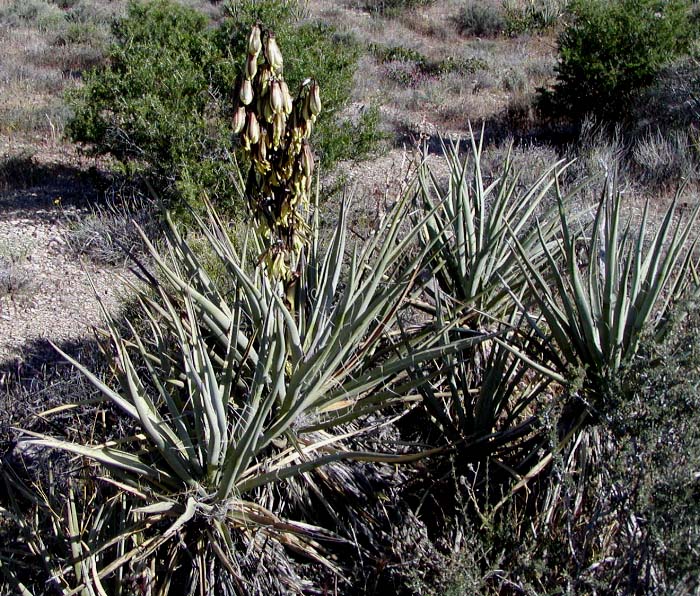
 Stan Shebs · CC BY-SA 3.0
also Datil yucca
Banana yucca
Yucca baccata
- Family:
- Asparagaceae
- Elevation:
- 3,000 ft – 8,000 ft
- Bloom:
- Apr – Jun
- Region:
- Southwest
A stout, low yucca with broad, stiff, blue-green sword leaves edged in curling fibers, topped in spring by dense clusters of waxy cream flowers. Its large fleshy, banana-like fruits were an important traditional food across the Southwest.
Care · tuned to the Southwest
Water
Very drought tolerant; needs essentially no supplemental water once established. Overwatering and poor drainage lead to rot. Tolerates monsoon rains well on rocky, draining sites.
Sun & exposure
Full sun; handles intense high-elevation light and reflected heat.
Soil
Prefers dry, rocky, gravelly, or sandy well-drained soil; tolerates alkaline and caliche ground. Avoid wet, heavy soils.
In the Southwest
Cold-hardy across a wide elevation range from desert into piñon-juniper woodland. Leaves end in sharp, rigid spines that easily puncture skin, so site away from walkways. Flowers depend on yucca moths for pollination.
Common problems & fixes
Yucca plant bug — stippled, bleached, speckled leaves
Fix — Blast them off with a hose and spot-treat heavy cases with insecticidal soap; vigorous plants shrug it off.
Root/crown rot from overwatering or poor drainage
Fix — Plant in fast-draining gritty soil, water deeply but infrequently, and never keep the crown wet.
Pets & toxicity
A true yucca containing saponins; ingestion of leaves or flowers can cause drooling, vomiting, or diarrhea in dogs, cats, and livestock, and the stiff spine-tipped leaves cause puncture injuries. Ripe fruit pulp is far less of a concern.
Easy to confuse with
- Soaptree yucca (Yucca elata) — narrow leaves and a tall trunk
- Yucca glauca — much narrower leaves and slimmer, dry fruit
Sources
Think you're looking at one?
Snap a photo and we'll rank the candidates against the local flora — honestly, and for free.
Identify a plant