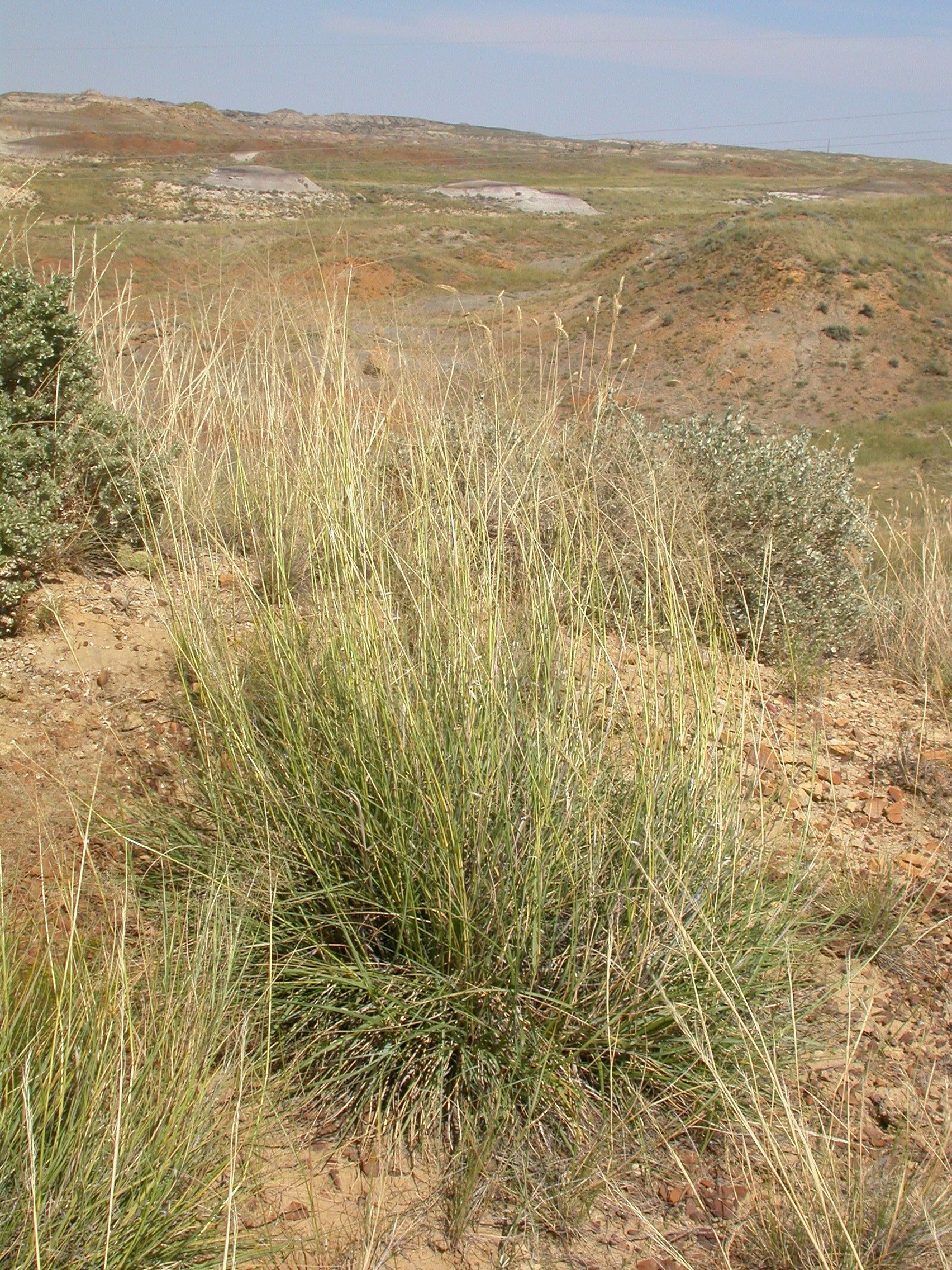
 Matt Lavin · CC BY-SA 2.0
Alkali sacaton
Sporobolus airoides
- Family:
- Poaceae
- Elevation:
- 2,000 ft – 7,000 ft
- Bloom:
- Jun – Sep
- Region:
- Southwest
A robust warm-season bunchgrass forming stout, rounded tussocks topped by large, diffuse, pinkish seed panicles that catch the light like a fine mist. It thrives where few grasses can, colonizing alkaline flats and saline bottomlands.
Care · tuned to the Southwest
Water
Highly drought tolerant yet also handles periodic flooding and standing salts; needs no supplemental water once established.
Sun & exposure
Full sun.
Soil
Excels in fine-textured, alkaline, and saline soils, including heavy clay bottomlands, but grows in most well-drained ground.
In the Southwest
Warm-season grower that turns tan and dormant in winter; cut back old clumps in late winter. Its tough tussocks provide forage and reseed to stabilize disturbed alkaline sites.
Common problems & fixes
Winter dormancy mistaken for a dead clump
Fix — The tan tussock is dormant, not dead; cut it back in late winter and it resprouts as soils warm.
Old thatch buildup crowds the crown
Fix — Cut or mow the clump low every year or two in late winter to remove dead thatch and refresh growth.
Pets & toxicity
Non-toxic to dogs and cats.
Easy to confuse with
- Sand dropseed (Sporobolus cryptandrus) — smaller, panicle base often enclosed in the sheath
- Indian ricegrass — finer clumps with airier panicles and sandier-soil preference
Sources
Think you're looking at one?
Snap a photo and we'll rank the candidates against the local flora — honestly, and for free.
Identify a plant