 Wikimedia Commons
also Cactus apple
Engelmann's prickly pear
Opuntia engelmannii
- Family:
- Cactaceae
- Elevation:
- 2,500 ft – 6,500 ft
- Bloom:
- Apr – Jun
- Region:
- Southwest
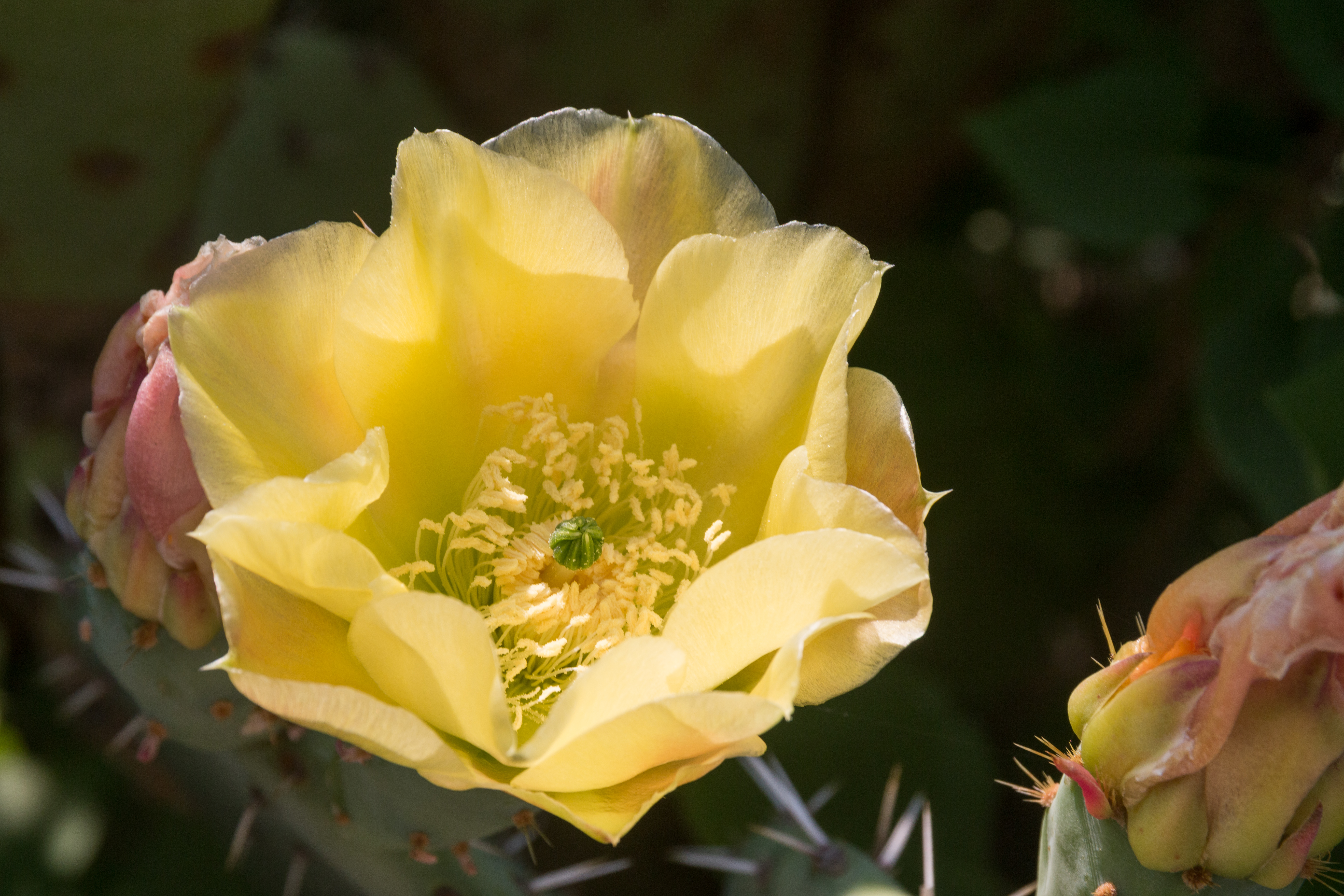
The broad blue-green paddle cactus with yellow-to-orange flowers and edible magenta fruit (tunas). The most widespread prickly pear across southern and central NM.
Care · tuned to the Southwest
Water
Rainfall only once established. Newly planted pads: no water for the first few weeks (let cut edges callus), then very sparingly. Winter watering rots it.
Sun & exposure
Full sun; more sun means more flowers and fruit.
Soil
Sharp-draining sandy or gravelly, alkaline. Never a low, soggy spot.
In the Southwest
Beware glochids — the tiny hair-like spines at each areole detach into skin and are worse than the big spines. Propagates trivially from a single pad laid on dry soil. Fruit and young pads (nopalitos) are edible once de-spined.
Common problems & fixes
Cochineal scale — white cottony masses on pads hide sap-sucking insects
Fix — Blast the cottony masses off with a strong jet of water and repeat; treat stubborn cases with insecticidal soap.
Overwatering rot — soft, blackened pads and basal rot from too much moisture
Fix — Plant in fast-draining soil and withhold irrigation, especially in winter and monsoon humidity.
Pets & toxicity
Not chemically toxic; spines and glochids cause mouth and paw injuries.
Easy to confuse with
- Plains prickly pear (O. polyacantha) — lower, denser spines
- Cholla (Cylindropuntia) — cylindrical, not flat, stems
Sources
Think you're looking at one?
Snap a photo and we'll rank the candidates against the local flora — honestly, and for free.
Identify a plant