 Rolland.franck · CC BY-SA 3.0
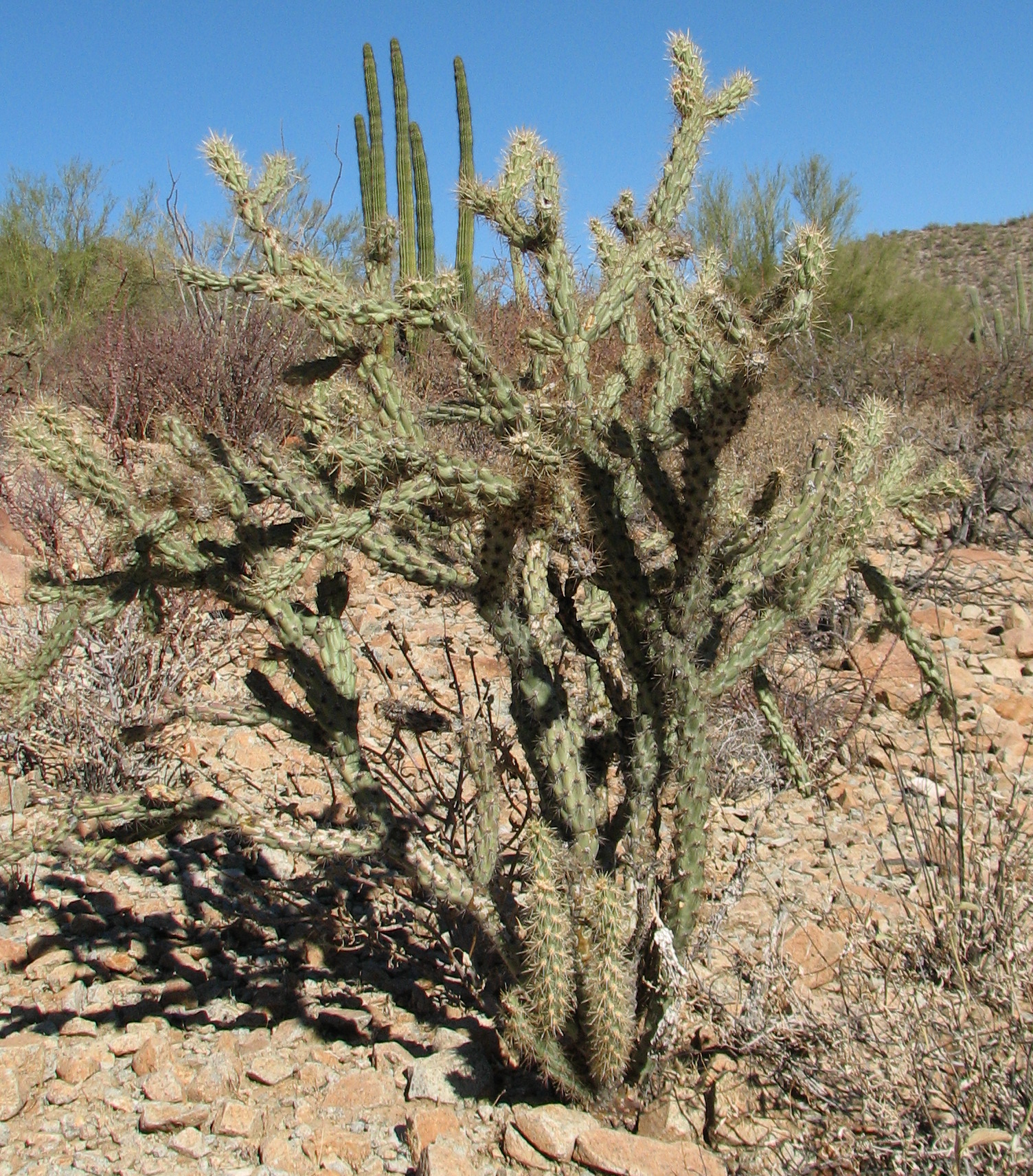
Buckhorn cholla
Cylindropuntia acanthocarpa
- Family:
- Cactaceae
- Elevation:
- 1,000 ft – 4,000 ft
- Bloom:
- Apr – Jun
- Region:
- Southwest
A shrubby, many-branched cholla whose stout, antler-like arms bristle with straw-colored spines and unfurl into showy yellow-to-bronze blooms each spring. It anchors bajadas and creosote flats across the Mojave and Sonoran deserts and offers nesting sites for cactus wrens.
Care · tuned to the Southwest
Water
Extremely drought tolerant once established; water sparingly in the warm growing season and keep dry in winter. Overwatering causes basal rot.
Sun & exposure
Full sun with abundant reflected heat; a poor performer in shade.
Soil
Needs sharp, gritty, fast-draining mineral soil; tolerates alkaline, rocky, and sandy substrates.
In the Southwest
Cold-hardy to roughly 15–20°F. Barbed spines and detachable joints make it hazardous to handle; segments cling to skin, clothing, and animals. Provides cover and nesting habitat for birds and rodents.
Common problems & fixes
Basal stem rot — soft, blackened base from excess moisture
Fix — Plant in fast-draining gritty soil and withhold water in winter and cool wet spells.
Detached barbed joints — a serious skin and eye hazard
Fix — Handle only with tongs or thick padding and remove stray segments from paths and pet areas.
Pets & toxicity
Not chemically toxic, but the barbed spines and easily detached joints are a serious mechanical hazard, embedding in paws, mouths, and skin.
Easy to confuse with
- Staghorn cholla (Cylindropuntia versicolor) — more slender, purplish stems, fewer spines
- Teddy bear cholla (Cylindropuntia bigelovii) — densely golden-spined, fewer branches
Sources
Think you're looking at one?
Snap a photo and we'll rank the candidates against the local flora — honestly, and for free.
Identify a plant