 CC BY-SA 3.0
also Alderleaf mountain mahogany
Mountain mahogany
Cercocarpus montanus
- Family:
- Rosaceae
- Elevation:
- 5,000 ft – 8,500 ft
- Bloom:
- Apr – Jun
- Region:
- Southwest
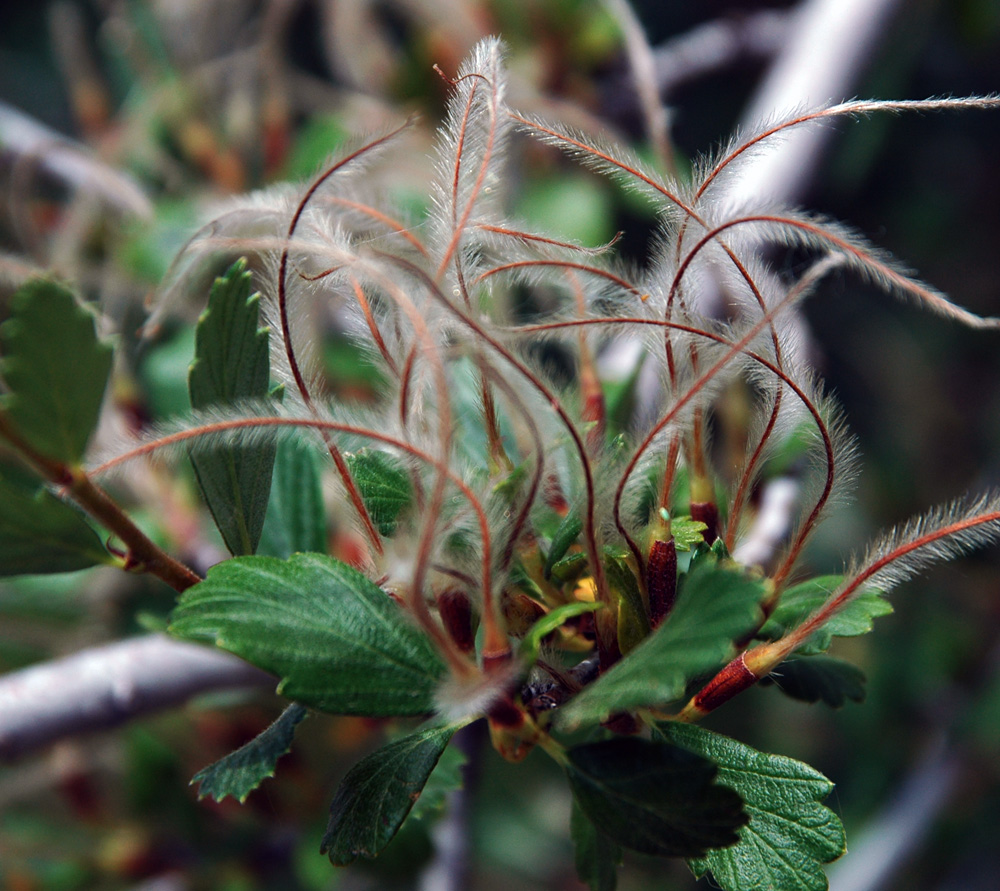
A tough, upright deciduous shrub of rocky slopes, prized for the silvery, spiraling feathery plumes that trail from its seeds and catch the light like curls of smoke. Its small wedge-shaped leaves and dense form make it a quiet backbone of foothill chaparral.
Care · tuned to the Southwest
Water
Very drought tolerant once established; occasional deep watering to establish, then little to none. Overwatering causes decline, and it greens up and sets seed plumes in response to spring and monsoon moisture.
Sun & exposure
Full sun to light shade; performs best in open, sunny exposures.
Soil
Prefers rocky, gravelly, well-drained and often alkaline or calcareous soils; a nitrogen-fixer that tolerates poor ground.
In the Southwest
Cold-hardy throughout the foothill and lower montane zones. The flowers are small and greenish, but the fuzzy silver seed tails are the real ornament. One of the most important browse plants for deer and elk in winter, and it provides cover for birds. Slow but long-lived and drought-proof.
Common problems & fixes
Chlorosis from overwatering — yellowing leaves in irrigated, poorly drained beds
Fix — Plant in lean, well-drained native soil and water sparingly once established.
Largely trouble-free — a tough, drought-hardy browse shrub
Fix — Site in full sun with good drainage and otherwise leave it alone; it thrives on neglect.
Pets & toxicity
Foliage can contain small amounts of cyanogenic compounds and has occasionally been implicated in livestock poisoning when eaten heavily under stress; normally safe browse, but large quantities of wilted foliage are best avoided. No specific toxicity to dogs or cats is well documented.
Easy to confuse with
- Curl-leaf mountain mahogany (Cercocarpus ledifolius) — evergreen with narrow, inrolled leathery leaves
- Apache plume (Fallugia paradoxa) — also plumed but with showy white rose-like flowers
Sources
Think you're looking at one?
Snap a photo and we'll rank the candidates against the local flora — honestly, and for free.
Identify a plant